Runway has become the signal of how fast generative video can mature when a product team treats creation like a real-time operating system. The company is racing to make video as responsive and programmable as code, and the strategy for Slot C today is to document how they build product rituals that keep experimentation fast without letting hallucinations or brand drift go public. Runway’s latest push is less about one-off demos and more about weaving observability into every template, every clip, and every safety guard, proving that a content-first company can also be the most disciplined creative stack in the generative video race.
Designing a creative operating system
Runway insists that every new feature is backed by a creative operating system: a script of prompts, guardrails, and telemetry that can be versioned and replayed. The company builds pre-checked prompt flows for generative video just like we build structured appendices in the AI fundamentals primer. Each template captures signal sources (datasets, model outputs, human annotations) and outputs (layers, composites, render quality). The differentiator is that Runway codifies the timeline: every transition, camera move, and style shift is stored as metadata so the team can ask, “Which version of the prompt, which director voice, and which context bundle produced this clip?” Without that discipline, generative video becomes a pile of untraceable renders that are impossible to audit or iterate safely.
Differentiating with automation and safety
Runway layers automation on top of creative intent by enforcing guardrails at the point of output. The platform tracks trigger conditions, policy tags, and brand identity flags before it sends every render to production. This is why the Model Context Protocol (MCP) practical guide matters: MCP keeps the render context (camera angles, lighting cues, scripted copy) consistent with what the operator approved. When policy detects a mismatch-say a celebrity likeness or a non-compliant brand mention-the automation halts and routes the render to a human reviewer instead of letting an unsafe clip slip out. That flow mirrors what we catalog in the Prompt Engineering in Practice playbook: each creative iteration has a versioned prompt and a safety gate.
Observability in motion
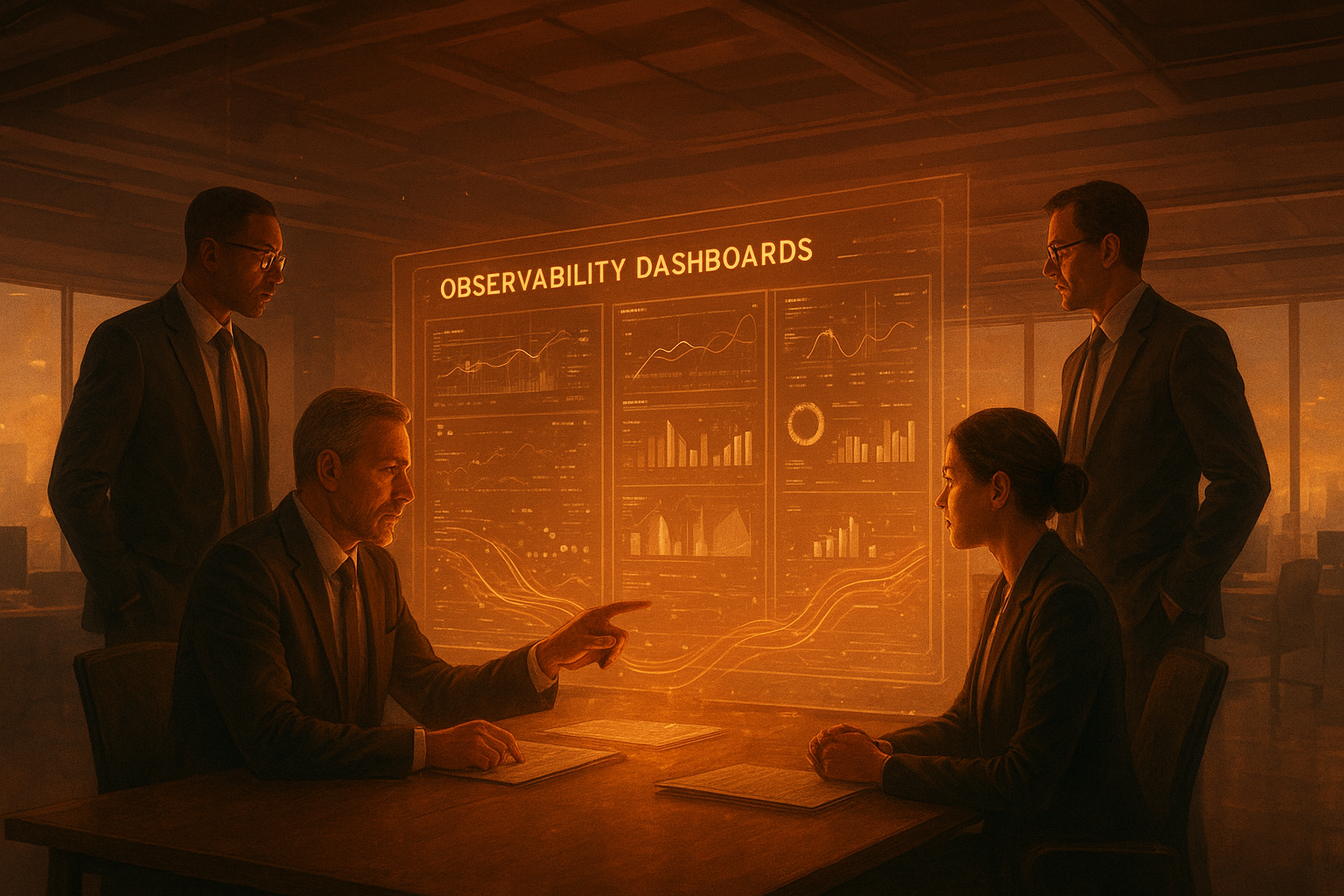
If we treat Runway as an observability-first company, we see dashboards that track not only performance metrics but also creative integrity signals. Every render emits telemetry such as guard names, output quality, style vectors, and compliance verdicts. That telemetry feeds into the same AI Incident Response Toolchain we recommend for incident logging, turning creative lapses into traceable events. The tooling records whichever guard triggered the alert, the context bundle that produced the clip, and the workspace version that shipped it. Observability also stores the human review notes: who approved the substitute scene, what brand guidelines were referenced, and whether the render was reverted. This way, when investors or marketing partners ask why a promo had a different lens, you can replay the exact context and guardrail history.
Embedding Runway inside your AI stack
Runway’s product strategy does not stop at its own interface; it choreographs how other tools plug into the stack. The company exposes connectors for editing suites, identity systems, and analytics, so teams can anchor Runway’s output inside more enterprise-aware workflows. That connector layer references the same instrumentation we highlight in the Agent Memory Architecture production layers retention failure modes article: every piece of generated media inherits a retention tag, a context hash, and a policy fingerprint. When a Runway clip lands in a marketing stack, the downstream system reads those tags to decide whether to publish, rerender, or escalate. It’s not enough to simply produce better video; Runway wants the video to carry its own observability, so operations teams can rely on the context they already instrumented.
What teams should watch next
Watch how Runway balances experimentation with the guardrails listed above. Their product bets are centered on hyper-iterating templates-adding features like live style transfer, multi-camera choreography, and brand-safe overlays-while simultaneously keeping every release within traceable frameworks. That means mapping new creative automations to the same telemetry we capture in the AI Incident Response Toolchain and letting each creative autopilot run update the context mesh so the next iteration ships faster. Value accrues when operators can point to an event log showing, “Runway clip X triggered guard Y, we rerouted it, and the covered brand still approved the publish.” That level of discipline is why product teams now trust Runway not just to create scenes but to keep those scenes accountable.
The future narrative
Runway’s product strategy may look like a generative video race, but the podium is reserved for teams that pair bold creativity with stitched-together observability. Future releases should continue to emphasize context bundles, guardrail automation, and telemetry-friendly APIs. When that happens, Runway becomes not just a tool for marketers, but a reliable partner for any builder who treats AI creativity as an explainable, governable operating system.
Related Posts


Extra paragraph:
Runway is also documenting the release checklist for every new generative-video capability. That checklist ties a release owner, a risk owner, and the measurement dashboards so the team can mark whether the clip shipped with full traceability. When a creative experiment triggers a guard, the checklist surfaces the key logs, so the crew can explain the trade-offs in the same language we use in the AI Incident Response Toolchain. Keeping those disciplines together is how Runway keeps the generative-video race accountable—fast, but never uncontrollable.