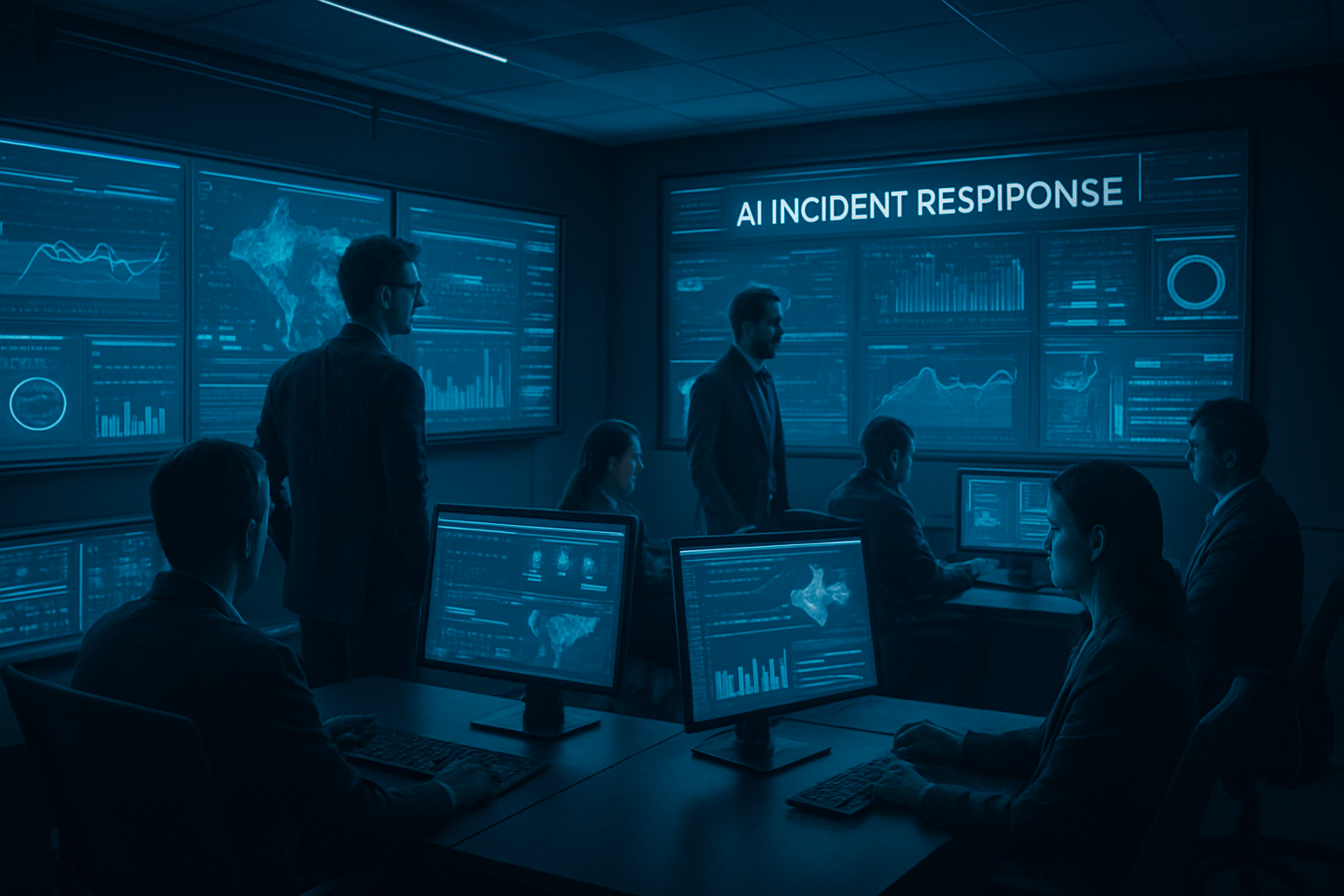
AI incident response for production systems is no longer optional. Teams shipping copilots, agent workflows, and retrieval-heavy products need a clear operating model that protects users and protects delivery speed. The practical mistake many teams make is monitoring infrastructure health while ignoring model behavior health. A green cluster does not mean safe, useful, or reliable answers. If your outputs drift, latency spikes on only certain prompts, or retrieval quality silently degrades, users still experience an incident.
A reliable response framework starts with classification. In day-to-day operations, incidents typically fall into five buckets: quality regression, safety/policy violation, retrieval failure, latency saturation, and cost runaway. This classification matters because each bucket requires different first actions. Quality regression calls for prompt or model rollback. Safety issues require immediate policy hardening and containment. Retrieval failures usually demand index, filter, or ranker checks. Latency saturation needs route and queue controls. Cost runaway requires fast budget gates and model fallback tiers. The point is simple: classify first, then respond.
Logging discipline is the second pillar. Log request identifiers, model/version, prompt template revision, parameter set, retrieval sources, tool calls, and user-visible outcome. Do not default to storing full raw conversations when not required; use redaction and structured traces. Your goal is to make triage faster without creating unnecessary privacy risk. Teams that log everything often make incidents harder, not easier, because signal gets buried in noise. Decision logs beat volume logs.
Alerting should be tied to user impact, not vanity thresholds. Alert when refusal rate changes materially for key flows, when factuality checks collapse, when policy flags spike, or when p95 latency harms critical journeys. Pair each alert with a known runbook action. “Switch model alias A→B,” “disable tool route X,” or “reduce retrieval depth” are actionable first moves. Alerts without first actions create operator paralysis. During incidents, the best teams reduce decisions, not increase them.
Containment must come before diagnosis. This sounds obvious until a high-traffic incident hits. Teams that jump directly into deep root-cause investigation while users are still impacted lose trust and time. Contain first: safe fallback responses, temporary capability reduction, stricter policy filters, and selective route disablement. Once blast radius is controlled, stabilize service with known-good configuration. Only then run root-cause analysis. This ordering shortens MTTR and protects customers.
Security and reliability are now the same conversation. Prompt injection, data exfiltration attempts, and unsafe tool calls can appear as normal traffic unless your telemetry and policy controls are integrated. This is why incident response must include security context by default. Run abuse-mode probes continuously, not only before launches. Enforce least privilege for tools and outbound calls. Capture suspicious pattern telemetry for investigation and future guard improvements.
Finally, harden after every incident. If you close incidents with only a postmortem document, nothing changes. Convert findings into defaults: better gates, clearer rollback switches, stronger synthetic checks, and tighter ownership. Measure recurrence and track whether new controls reduce repeat failures. High-performing teams treat incident response as product infrastructure, not as emergency heroics. Over time, this creates a system that is both safer and faster to evolve.
For practical implementation, your runbook should fit one screen: incident class, severity criteria, owner map, rollback options, communication template, and closure checks. Add a weekly review of near-misses to catch weak signals before they become outages. The outcome is predictable operations under pressure, which is the real competitive advantage in AI-enabled products.