
Technologies
-
Beyond RAG: Advanced Retrieval Architectures for Production AI
 in Technologies
Introduction to Retrieval-Augmented Generation Retrieval-Augmented Generation (RAG) has laid the groundwork for integrating retrieval mechanisms with generative models, enabling AI systems to provide contextually accurate responses based on real-time data retrieval. By meshing together the retrieval of pertinent data segments and employing them in generating responses, RAG models have revolutionized the capability of AI systems…
-
Observability Fabric for Autonomous AI Teams
 in Technologies
Understanding Observability Fabric for Autonomous AI Teams The rise of AI technology has transformed how businesses operate and innovate. However, with increased usage comes complexity, especially in systems driven by AI capabilities. This complexity necessitates advanced frameworks for effective monitoring and management. Enter the concept of Observability Fabric—a multi-layered structure that enhances the monitoring, management,…
-
Nemotron 3 Super
 in Technologies
NVIDIA’s Nemotron 3 Super arrives at a moment when many teams are moving from chatbot pilots to production agent systems that have to run every day without constant human rescue. The key question is not whether another large model can score well on benchmarks, but whether it reduces failure rates in real operating environments: retrieval…
-
Context Mesh Playbooks: Composable Guardrails for Responsible Agent Stacks
 in Technologies
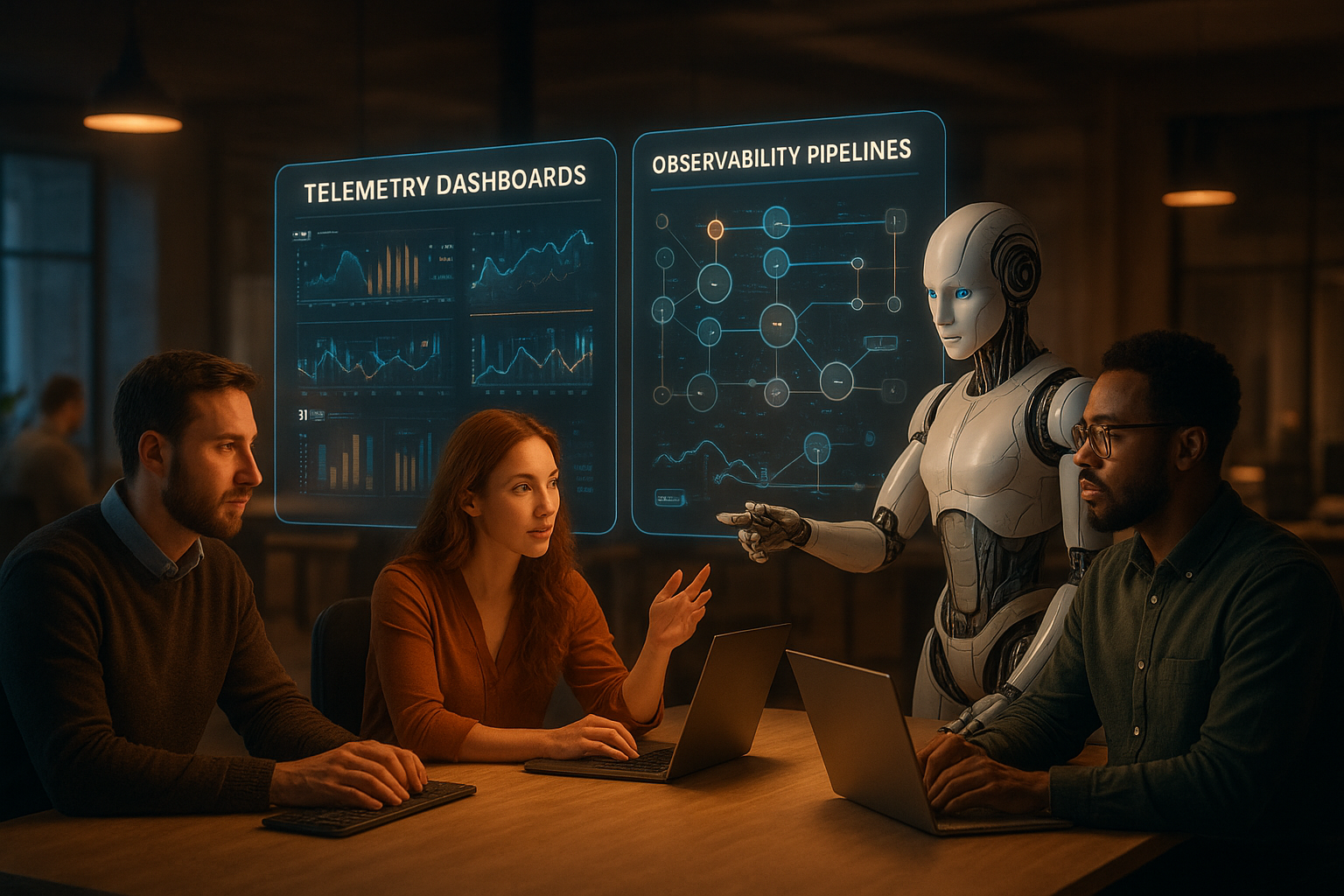
Context Mesh Playbooks are the living manuals that keep hybrid AI stacks honest. When agents, toolchains, and humans share context but not cadence, something has to capture the boundaries, the intent, and the risk appetite before any tool hops to the next handoff. A playbook built on the mesh of contexts—intentional bundles of metadata, telemetry,…
-
Model Context Protocol (MCP) as the operational anchor for hybrid AI tooling
 in Technologies
Why the Model Context Protocol anchors hybrid AI Every AI team I work with eventually runs into the same mismatch: the data pile that feeds an agent is a different story from the telemetry available to observability, and both are different from the intents the operator actually cares about. The Model Context Protocol (MCP) is…
-
Synthetic Data for AI: Benefits, Bias Risks, and Minimum Validation
 in Technologies
Synthetic data has graduated from laboratory curiosity to operational necessity. When teams build supervised, retrieval, or agentic workflows, real data is often incomplete, sensitive, or simply unavailable, yet the expected behavior profile remains the same. Synthetic data lets you bootstrap models, increase coverage of rare failure modes, and rehearse guardrails without touching production logs. The…
-
Knowledge Graph + LLM: When It Beats a Vector Database
 in Technologies
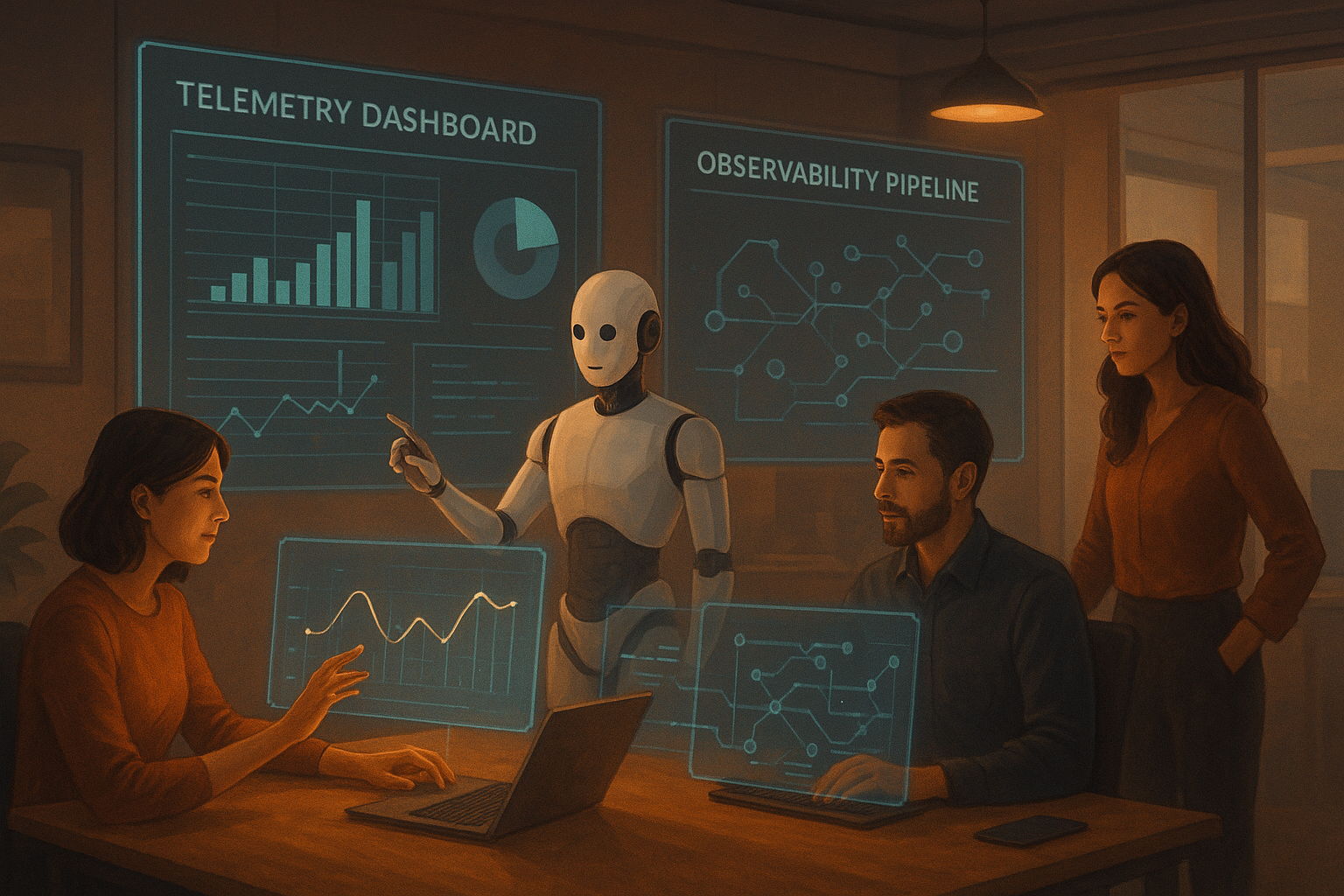
Vector databases became the default retrieval layer for many LLM applications because they are fast to deploy and flexible for semantic search. But there is a class of problems where vector similarity alone is not enough: questions that depend on explicit relationships, multi-hop reasoning, and strict traceability of facts. In those cases, a Knowledge Graph…
-
RAG vs Fine-Tuning: When to Use Each Approach in 2026
 in Technologies
RAG vs fine-tuning is no longer an academic comparison. In production teams, this choice affects latency, reliability, compliance, and cost within the first sprint. If your AI assistant must answer with current policies, release notes, and changing documentation, retrieval can reduce stale responses quickly. If your assistant must consistently follow a narrow style, tone, and…
-
Observability keeps AI agents honest
 in Technologies
Observability keeps AI agents honest. When engineering teams revisit the foundation described in the [Artificial Plaza AI fundamentals primer](https://artificialplaza.com/artificial-intelligence-concept-and-detailed-oper
-
Feature Stores for Agentic AI Systems: Design Patterns That Scale
 in Technologies
Feature stores are becoming foundational for agentic AI products because context quality drives output quality. Many teams still treat context assembly as middleware glue, but that approach breaks under scale, concurrency, and policy pressure. A feature-store mindset introduces ownership, consistency, freshness guarantees, and traceability for the signals your agents use to decide. See also Model…
-
Agentic evaluation playbook
 in Technologies
Many teams evaluating agentic AI systems still rely on a narrow view of performance: one benchmark score, one qualitative review, and one optimistic conclusion. That approach fails in production. Real decisions require a playbook that connects technical quality, operational risk, and business impact in one evaluation loop. If your evaluation practice is still maturing, start…
-
GPT 5.4
 in Technologies
GPT 5.4 is becoming a strategic topic for teams that already run AI systems in production. The conversation should not start with benchmark excitement. It should start with operations: where this model can improve reliability, where it can create new costs, and how to adopt it without destabilizing live workflows. For many organizations, model upgrades…
-
Agent memory architecture in production
 in Technologies
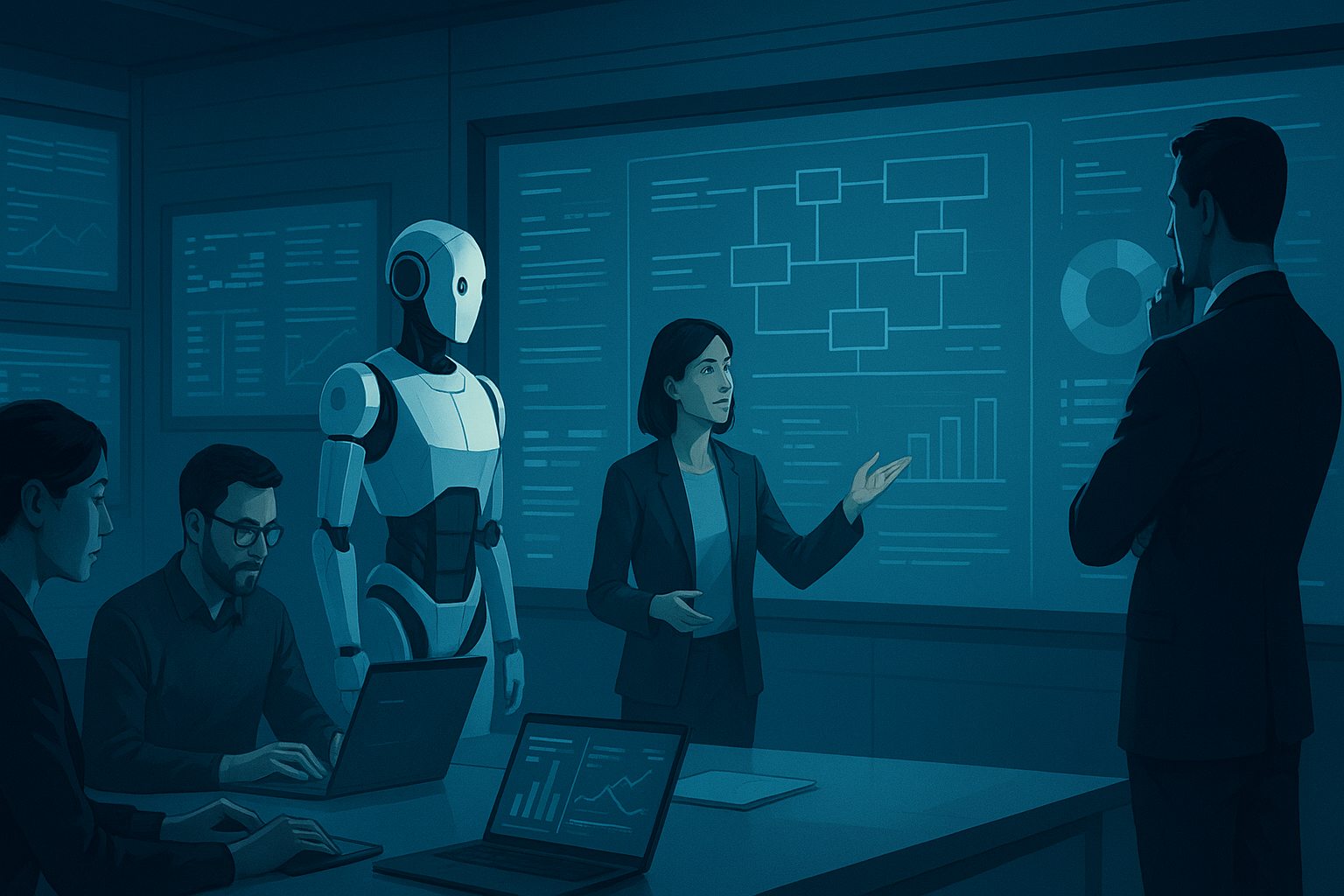
Memory is becoming the operational backbone of modern AI agents. Teams that ignore memory architecture quickly run into the same pattern: inconsistent outputs, repeated mistakes, and expensive retries. In production, memory is not a single feature. It is a layered system combining short-term context, task state, policy constraints, and long-term knowledge retention. If your team…
-
Evaluation frameworks for generative AI
 in Technologies
Most teams building with generative AI eventually hit the same wall: the demo looked impressive, but production quality is unstable. One week users praise outputs, and the next week support tickets spike. The core issue is not just prompting or model choice. It is the lack of an evaluation framework that translates business expectations into…
-
Video and Artificial Intelligence
 in Technologies
In recent years, the combination of video and artificial intelligence (AI) has become an increasingly powerful tool in various industries. AI algorithms can analyze and interpret video content, allowing businesses to extract valuable insights and make data-driven decisions. This integration of video and AI has the potential to revolutionize fields such as surveillance, marketing, healthcare,…
-
The Evolution of Machine Learning
 in Technologies
Machine learning has rapidly evolved over the past decade, revolutionizing various industries and transforming the way we live and work. From self-driving cars to personalized recommendations on streaming platforms, machine learning algorithms have become an integral part of our daily lives. In this article, we will explore the evolution of machine learning, from its early…
-
The Role of AI in Climate Change
 in Technologies
The issue of climate change has become increasingly urgent in recent years. The world is experiencing rising temperatures, extreme weather events, and the loss of biodiversity, all of which have significant impacts on our planet and its inhabitants. As scientists and policymakers search for solutions to mitigate and adapt to these changes, artificial intelligence (AI)…
-
Protecting AI Systems Against Cyber Attacks
 in Technologies
As artificial intelligence (AI) continues to advance and become more integrated into our daily lives, the need to protect AI systems against cyber attacks becomes increasingly important. AI systems are vulnerable to various forms of cyber threats, including data breaches, malware attacks, and adversarial attacks. These attacks can have severe consequences, such as compromising the…
-
The Best Movies About Artificial Intelligence
 in Technologies
Artificial Intelligence (AI) has become a fascinating and thought-provoking topic in recent years. It has captured the imagination of filmmakers around the world, resulting in the creation of several movies that explore the potential and consequences of AI. These movies not only entertain us with their compelling storylines but also raise important questions about the…
-
Personalized Learning with Artificial Intelligence
 in Technologies
Personalized learning is an educational approach that tailors instruction to the individual needs and preferences of each student. It recognizes that every student learns differently and at their own pace, and aims to provide a customized learning experience that maximizes their potential. With the advancements in technology, artificial intelligence (AI) has emerged as a powerful…