
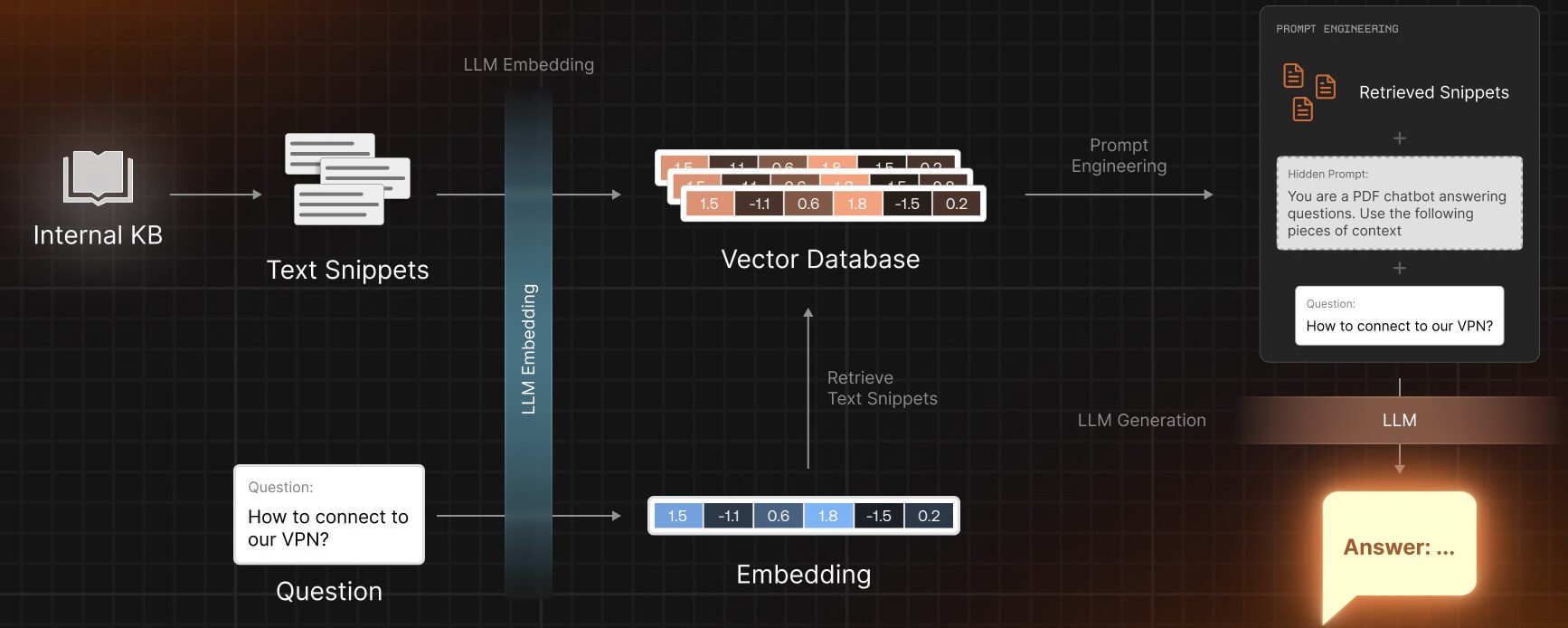
Vector databases are a type of database that store and manage vector data, which represents spatial information using points, lines, and polygons. These databases are commonly used in geographic information systems (GIS) to store and analyze spatial data.
In this article, we will explore the concept of vector databases in more detail. We will discuss how vector data is structured and stored in these databases, and the advantages they offer over other types of databases. Additionally, we will look at some popular vector database management systems, and the different ways in which vector data can be queried and analyzed. By the end of this article, you will have a better understanding of vector databases and their role in managing and analyzing spatial data.
Vector databases are a type of database management system that stores and retrieves data in a vectorized format.
Vector databases are becoming increasingly popular in the field of artificial intelligence and machine learning. They offer a more efficient way to store and process large amounts of data, especially when it comes to working with complex mathematical models.
Unlike traditional relational databases, which organize data into tables with rows and columns, vector databases store data as vectors, or arrays of numbers. This allows for faster and more efficient computation, as operations can be performed on entire vectors rather than individual data points.
One of the key advantages of vector databases is their ability to handle high-dimensional data. In fields like computer vision and natural language processing, where data often consists of images, videos, or text, vector databases can provide significant performance improvements.
Benefits of Vector Databases
There are several benefits to using vector databases in AI and ML applications:
- Efficient storage: Vector databases store data in a compact format, reducing storage requirements compared to traditional databases.
- Fast retrieval: Vectorized data allows for efficient indexing and retrieval, enabling faster query response times.
- Scalability: Vector databases can scale horizontally, meaning they can handle increasing amounts of data by adding more servers to the system.
- Flexibility: Vector databases can handle a wide range of data types, including numerical, categorical, and textual data.
With the rise of AI and ML technologies, many companies are developing vector databases tailored specifically for these applications. Some of the leading companies in this space include OpenAI, Amazon AI, Meta AI, Google AI, and Microsoft and AI.
Related Posts




These companies are leveraging vector databases to power their AI models and provide efficient data storage and retrieval solutions to their customers.
Conclusion
Vector databases are revolutionizing the way data is stored and processed in the field of AI and ML. Their ability to handle high-dimensional data and perform efficient computations on vectors make them an essential tool for companies working in these domains.
As AI technologies continue to advance, the demand for vector databases is expected to grow. It is crucial for companies and developers in the AI and ML space to explore and leverage the benefits of vector databases to unlock the full potential of their applications.
They are designed to optimize the storage and processing of vector data, such as spatial and geometric data.
Vector databases are specialized databases that are designed to efficiently store and process vector data. Vector data refers to data that represents spatial and geometric information, such as points, lines, and polygons.
These databases are specifically designed to handle the complex nature of vector data, which can include attributes and relationships between different elements. By organizing and structuring the data in a way that is optimized for spatial and geometric operations, vector databases enable efficient querying and analysis of this type of data.
Advantages of Vector Databases
There are several advantages to using vector databases for managing spatial and geometric data:
- Efficient storage: Vector databases are designed to store vector data in a compact and efficient manner. This allows for the storage of large amounts of spatial and geometric data without taking up excessive storage space.
- Fast query performance: Vector databases are optimized for spatial and geometric operations, allowing for fast query performance. This is especially important when dealing with large datasets that require complex spatial analysis.
- Flexibility: Vector databases support a wide range of spatial and geometric data types, allowing for the storage and analysis of diverse datasets. This flexibility makes them suitable for a variety of applications, from geographic information systems (GIS) to computer-aided design (CAD).
- Data integrity: Vector databases ensure data integrity by enforcing constraints and rules on the spatial and geometric data. This helps to prevent errors and inconsistencies in the data, ensuring its accuracy and reliability.
Applications of Vector Databases
Vector databases have a wide range of applications in various industries and domains:
- Geographic Information Systems (GIS): Vector databases are extensively used in GIS applications for managing and analyzing spatial data. They enable the storage and retrieval of geographic information, allowing for the creation of maps, spatial analysis, and decision-making processes.
- Transportation and logistics: Vector databases play a crucial role in transportation and logistics industries. They are used for route optimization, location-based services, fleet management, and spatial analysis of transportation networks.
- Urban planning and development: Vector databases are utilized in urban planning and development projects to manage and analyze spatial data related to land use, zoning, infrastructure, and environmental factors. They help in making informed decisions and optimizing urban development processes.
- Environmental management: Vector databases are used in environmental management to store and analyze spatial data related to natural resources, habitats, and environmental conditions. They assist in monitoring and managing environmental assets and supporting sustainable practices.
In conclusion, vector databases are powerful tools for efficiently managing and analyzing spatial and geometric data. They offer advantages such as efficient storage, fast query performance, flexibility, and data integrity. With their wide range of applications in GIS, transportation, urban planning, and environmental management, vector databases play a crucial role in various industries and domains.
Vector databases provide efficient indexing and querying capabilities for vector data, allowing for fast and accurate spatial analysis.
Vector databases are an essential tool in the field of spatial analysis. They are designed to efficiently store and manage vector data, which is a type of geographic data that represents points, lines, and polygons.
These databases use a specialized indexing structure that allows for quick retrieval of data based on spatial relationships. This means that queries can be performed to find all the points, lines, or polygons that intersect with a given area, or to find the nearest neighbors to a specific point.
One of the key advantages of vector databases is their ability to handle large datasets with complex geometries. They can handle millions of features and perform complex spatial operations without sacrificing performance.
Vector databases also support advanced spatial analysis functions, such as spatial joins, buffering, and spatial clustering. These functions enable users to analyze and manipulate the spatial relationships between different features, providing valuable insights for various applications.
Several companies offer vector database solutions, including companies like Amazon AI, Meta AI, and Google AI. These companies provide powerful tools and technologies for managing and analyzing vector data.
Vector databases are widely used in various domains, including urban planning, transportation, environmental management, and emergency response. For example, urban planners can use vector databases to analyze the impact of new developments on existing infrastructure, while emergency responders can use them to quickly identify the nearest hospitals or fire stations.
In conclusion, vector databases are an essential component of spatial analysis. They provide efficient indexing and querying capabilities for vector data, enabling fast and accurate analysis of spatial relationships. With their advanced features and support from various companies, vector databases are a valuable tool for a wide range of applications.
They are commonly used in applications that require complex spatial analysis, such as geographic information systems (GIS) and location-based services.
Vector databases are an essential component in various applications that involve complex spatial analysis. These databases are particularly useful in geographic information systems (GIS) and location-based services.
A vector database is a collection of data that represents spatial information using points, lines, and polygons. Each element in the database is represented by a vector, which consists of coordinates that define its position and shape. This data structure allows for efficient storage and retrieval of spatial information.
One of the main advantages of using vector databases is their ability to handle complex spatial relationships. For example, they can store information about the boundaries of countries, cities, and other geographic features. This allows for advanced spatial analysis, such as determining which points are within a certain area or finding the shortest path between two locations.
In addition to GIS and location-based services, vector databases are also used in various other fields. For instance, in the field of urban planning, these databases can be used to analyze the impact of new constructions on the existing infrastructure. They are also used in environmental studies to analyze the distribution of species and identify areas of high biodiversity.
When it comes to implementing vector databases, there are several software tools available. Some popular options include PostGIS, a spatial extension for the PostgreSQL database, and GeoServer, an open-source server for sharing geospatial data. These tools provide developers with the necessary functionality to create, query, and manipulate vector databases.
Furthermore, several companies specialize in providing software solutions for vector databases. These companies offer comprehensive tools and services that cater to the specific needs of different industries. Some notable companies in this space include Esri, a leading provider of GIS software, and Mapbox, a company that offers mapping and location services.
In conclusion, vector databases play a crucial role in applications that require complex spatial analysis. They enable efficient storage and retrieval of spatial information, allowing for advanced analysis and decision-making. Whether it’s in GIS, urban planning, or environmental studies, vector databases provide the foundation for accurate and insightful spatial analysis.
Vector databases can handle large volumes of vector data and support various data types, including points, lines, and polygons.
Vector databases have become an essential tool for managing and analyzing large volumes of vector data. These databases are designed to handle different data types, such as points, lines, and polygons, making them versatile and suitable for a wide range of applications.
One of the key advantages of vector databases is their ability to store and process spatial data. This means that they can efficiently handle data that relates to real-world locations and geographic features. For example, a vector database can store information about the location of cities, the shape of a river, or the boundaries of a national park.
Vector databases use a data structure called a vector model to represent and organize spatial data. In this model, points, lines, and polygons are represented as mathematical vectors. Each vector is defined by its coordinates and can be associated with additional attributes, such as the name of a city or the population of a country.
These databases provide powerful querying capabilities, allowing users to retrieve specific subsets of data based on different criteria. For example, you can query a vector database to find all cities located within a certain distance from a given point or to identify all rivers that cross a particular region.
Vector databases are widely used in various industries and domains. In the field of urban planning, they are used to analyze and visualize spatial data, helping to make informed decisions about land use and infrastructure development. In the transportation industry, vector databases are used to optimize routes and manage traffic flows. They are also used in environmental studies to model and analyze ecosystems and natural resources.
Several companies offer vector database solutions that cater to different needs and requirements. These include open-source options like PostGIS and proprietary solutions like Oracle Spatial and Microsoft SQL Server. Each of these databases has its own strengths and features, so it’s important to choose the one that best fits your specific use case.
In conclusion, vector databases play a crucial role in managing and analyzing large volumes of vector data. They provide efficient storage and processing capabilities for spatial data, allowing users to query and analyze it effectively. With the increasing availability of vector database solutions, organizations can leverage this technology to gain valuable insights and make informed decisions in various domains.
Frequently Asked Questions
1. What is a vector database?
A vector database is a type of database that stores and manages vector data, which represents spatial data using geometric shapes such as points, lines, and polygons.
2. What are the advantages of using a vector database?
Some advantages of using a vector database include efficient storage and retrieval of spatial data, support for complex spatial analysis, and compatibility with various GIS software.
3. Can a vector database handle large datasets?
Yes, a vector database can handle large datasets by using indexing and other optimization techniques to improve performance and scalability.
4. What are some popular vector databases?
Some popular vector databases include PostgreSQL with the PostGIS extension, MySQL with the Spatial extension, and Oracle Spatial and Graph.