
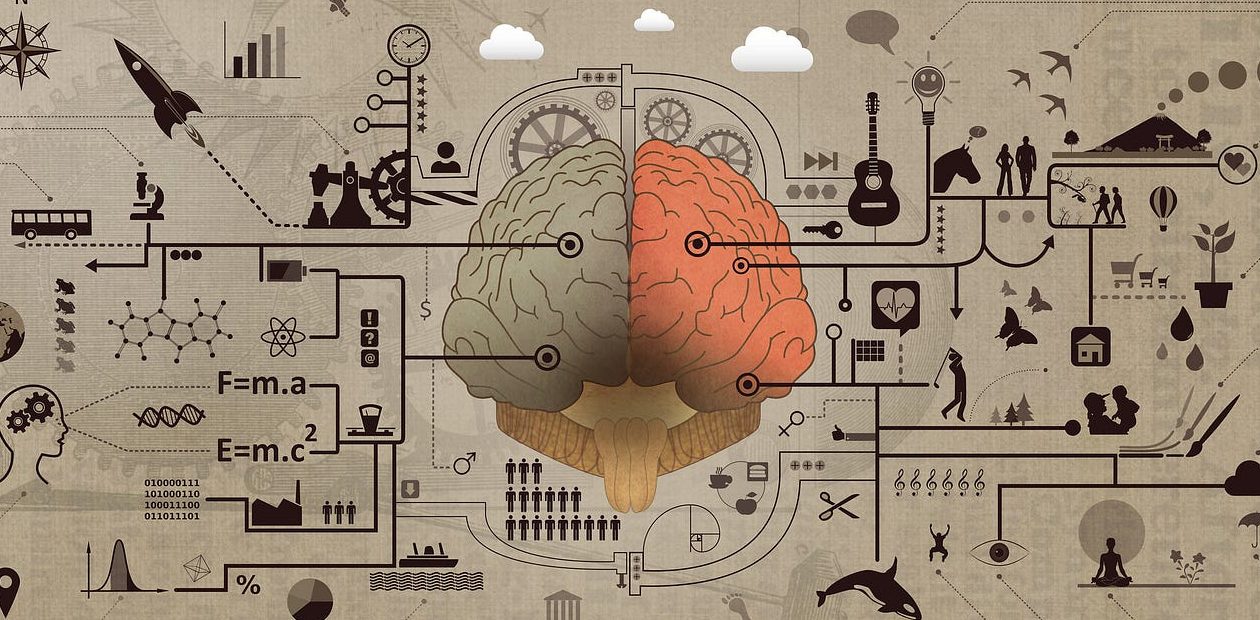
Deep learning is a branch of artificial intelligence that focuses on training neural networks to learn and make decisions in a similar way to the human brain. It has gained significant attention in recent years due to its ability to solve complex problems and achieve state-of-the-art performance in various domains, such as computer vision, natural language processing, and speech recognition.
In this article, we will explore the fundamental concepts of deep learning and how it differs from traditional machine learning approaches. We will delve into the architecture of deep neural networks, including convolutional neural networks (CNNs) and recurrent neural networks (RNNs). Additionally, we will discuss the training process of deep learning models, including the commonly used optimization algorithms and regularization techniques. By the end of this article, you will have a solid understanding of the key principles behind deep learning and how it is revolutionizing the field of artificial intelligence.
Deep learning is a subset of machine learning that focuses on neural networks with multiple layers.
Deep learning is a fascinating field of study that falls under the umbrella of machine learning. It involves training artificial neural networks with multiple layers to learn and make predictions from large amounts of data. These neural networks are inspired by the structure and function of the human brain, allowing them to process complex information and uncover patterns that may not be easily apparent to humans.
One of the main advantages of deep learning is its ability to automatically learn and extract features from raw data. Traditional machine learning algorithms often require manual feature engineering, where experts need to identify and extract relevant features from the data. In deep learning, the neural networks are designed to automatically learn these features by themselves, eliminating the need for manual intervention.
Deep learning has revolutionized various fields, including computer vision, natural language processing, and speech recognition. In computer vision, deep learning algorithms can analyze and understand images, enabling applications such as facial recognition, object detection, and autonomous driving. In natural language processing, deep learning models can comprehend and generate human-like text, making chatbots and language translation systems possible.
There are several popular deep learning architectures, such as convolutional neural networks (CNNs) and recurrent neural networks (RNNs). CNNs are particularly effective for image processing tasks, while RNNs excel in sequential data analysis, such as speech recognition or natural language understanding.
The success of deep learning can be attributed to the availability of large datasets and the computational power of modern hardware. With the rise of big data and advancements in parallel computing, deep learning models can be trained on massive amounts of data, leading to improved accuracy and performance.
Related Posts



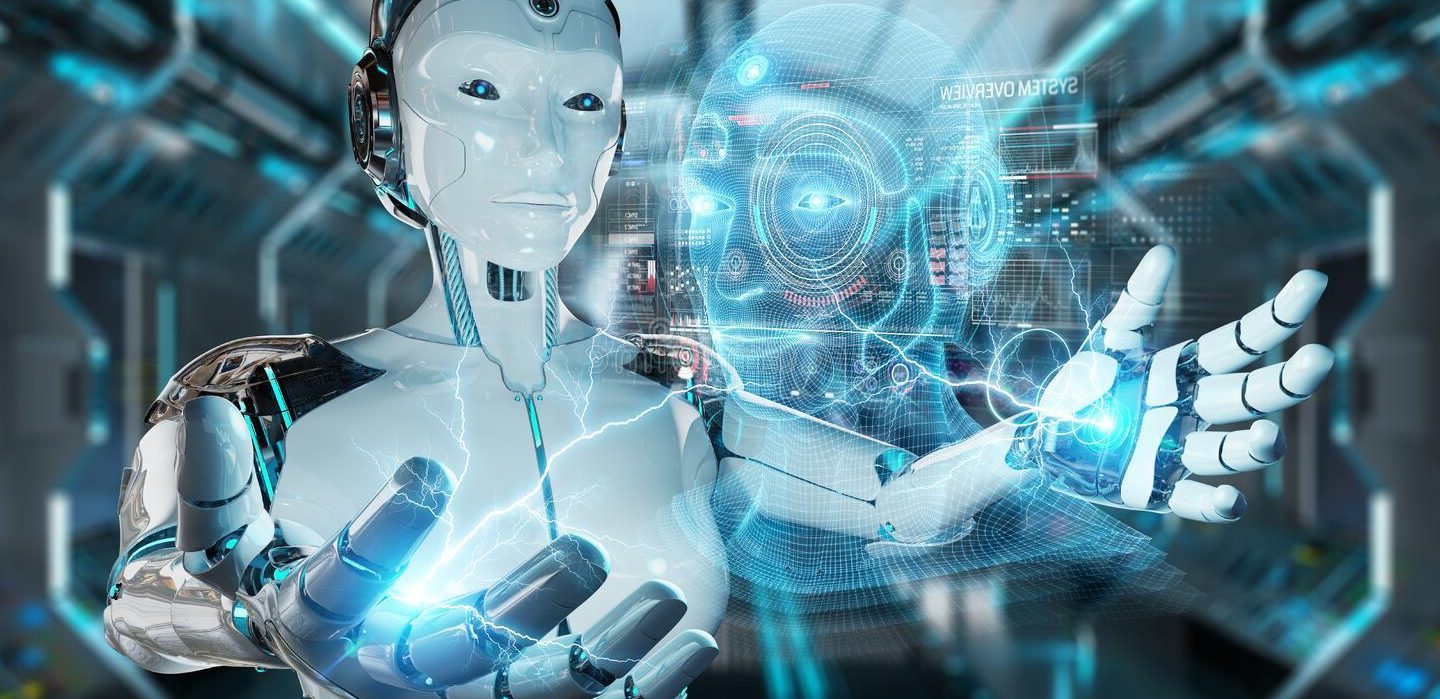
Many companies and organizations have embraced deep learning to develop cutting-edge technologies. Companies like OpenAI, Amazon AI, Meta AI, Google AI, and Microsoft are actively involved in research and development of deep learning applications. These companies are pushing the boundaries of what is possible with artificial intelligence, creating innovative solutions that impact various industries.
In conclusion, deep learning is a powerful tool in the field of artificial intelligence. Its ability to automatically learn and extract features from data has revolutionized many industries, including computer vision and natural language processing. With the support of large datasets and advanced hardware, deep learning continues to advance and shape the future of AI.
It is used to solve complex problems and process large amounts of data.
Deep learning is a powerful subset of artificial intelligence that has gained significant attention in recent years. It is a branch of machine learning that focuses on training artificial neural networks to perform complex tasks. These neural networks are inspired by the structure and function of the human brain, allowing them to process and analyze vast amounts of data.
One of the main advantages of deep learning is its ability to solve complex problems that were previously considered challenging for traditional algorithms. This is because deep learning models can automatically learn and extract features from raw data, without the need for manual feature engineering. This makes it particularly useful for tasks such as image and speech recognition, natural language processing, and even autonomous driving.
How does deep learning work?
At its core, deep learning relies on artificial neural networks, which are composed of interconnected nodes or “neurons”. These neurons are organized into layers, with each layer performing a specific operation on the input data. The output of one layer becomes the input for the next layer, allowing the network to progressively learn and extract more complex features.
Deep learning models typically consist of multiple hidden layers, hence the term “deep”. These hidden layers enable the network to learn hierarchical representations of the data, capturing both low-level and high-level features. The more layers a model has, the deeper it is, and the more complex patterns it can learn.
Training deep learning models
To train a deep learning model, large amounts of labeled data are required. This data is used to feed the model during the training process, where it learns to make accurate predictions or classifications. The process involves adjusting the weights and biases of the neural network through an optimization algorithm, such as stochastic gradient descent.
During training, the model compares its predictions with the known labels and computes a loss or error value. This value is then used to update the model’s parameters, gradually improving its performance. The training process is repeated multiple times, with the model adjusting its parameters to minimize the loss and improve its accuracy.
Applications of deep learning
Deep learning has revolutionized various industries and has found applications in numerous fields. In healthcare, deep learning models have been used for medical image analysis, disease diagnosis, and drug discovery. In finance, deep learning algorithms have been employed for fraud detection, stock market analysis, and risk assessment.
In the field of natural language processing, deep learning has enabled significant advancements in machine translation, sentiment analysis, and chatbot development. Deep learning has also played a crucial role in the development of autonomous vehicles, enabling them to perceive and understand the environment.
In conclusion, deep learning is a powerful tool that allows us to solve complex problems and process large amounts of data. Its ability to automatically learn and extract features from raw data makes it particularly useful in various domains. As technology continues to advance, we can expect deep learning to play an even more significant role in shaping the future.
Deep learning models are capable of learning and making predictions without being explicitly programmed.
Deep learning is a subfield of artificial intelligence that focuses on the development and application of artificial neural networks. These neural networks are designed to mimic the way the human brain works, allowing machines to learn and make predictions based on data.
Unlike traditional machine learning algorithms that rely on explicit programming, deep learning models are able to automatically learn and extract features from raw data. This makes them particularly well-suited for tasks such as image and speech recognition, natural language processing, and autonomous driving.
How do deep learning models work?
Deep learning models are composed of multiple layers of interconnected nodes, known as artificial neurons or simply neurons. Each neuron receives inputs from the previous layer and applies a mathematical operation to them. The result is then passed to the next layer, where the process is repeated.
The strength of the connections between neurons, known as weights, is adjusted during the training process. This allows the model to learn the underlying patterns and relationships in the data. The more layers and neurons a deep learning model has, the more complex patterns it can learn.
Training deep learning models
Training a deep learning model involves feeding it with a large amount of labeled data and adjusting the weights of the neurons to minimize the difference between the predicted outputs and the true outputs. This process is known as backpropagation.
Deep learning models require a significant amount of computational power and data to train effectively. They also require a lot of training time and expertise to set up and fine-tune. However, once trained, these models can make accurate predictions on new, unseen data.
Applications of deep learning
Deep learning has been successfully applied to a wide range of tasks and industries. In the healthcare sector, deep learning models have been used for diagnosing diseases from medical images and predicting patient outcomes. In the financial industry, they have been used for fraud detection and risk assessment. In the entertainment industry, deep learning has been used for recommendation systems and content generation.
Many companies, such as OpenAI, Amazon AI, Meta AI, Google AI, and Microsoft, are investing heavily in deep learning research and development. They are creating innovative tools and technologies that leverage the power of deep learning to solve complex problems and improve efficiency.
Conclusion
Deep learning is revolutionizing the field of artificial intelligence by enabling machines to learn and make predictions without being explicitly programmed. Its ability to automatically learn features from raw data makes it a powerful tool for a wide range of applications. As deep learning continues to advance, we can expect to see even more exciting developments and breakthroughs in the future.
Deep learning has been successful in various fields, such as computer vision, natural language processing, and speech recognition.
Deep learning is a branch of artificial intelligence that has gained significant attention in recent years. It is a subset of machine learning that focuses on training artificial neural networks to learn and make decisions on their own. This technology has proven to be highly effective in various fields, including computer vision, natural language processing, and speech recognition.
One of the key advantages of deep learning is its ability to automatically extract meaningful features from raw data. This means that instead of manually designing features, deep learning models can learn to recognize patterns and extract relevant information from the input data. This makes it particularly useful in tasks such as image classification, object detection, and speech recognition.
Deep learning models are typically composed of multiple layers of artificial neurons, known as neural networks. Each neuron receives inputs from the previous layer, applies a mathematical transformation to those inputs, and produces an output. These layers are interconnected, and the output of one layer serves as the input for the next layer. By training these neural networks on large amounts of labeled data, they can learn to recognize complex patterns and make accurate predictions.
Applications of Deep Learning
Deep learning has found applications in various fields, revolutionizing industries and enabling new possibilities. Let’s explore some of the key applications of deep learning:
- Computer Vision: Deep learning has significantly advanced computer vision tasks such as image classification, object detection, and image segmentation. It has enabled machines to accurately identify and classify objects in images and videos, leading to advancements in autonomous vehicles, surveillance systems, and medical imaging.
- Natural Language Processing: Deep learning has greatly improved natural language processing tasks such as language translation, sentiment analysis, and question answering. It has enabled machines to understand and generate human language, leading to advancements in virtual assistants, chatbots, and language translation services.
- Speech Recognition: Deep learning has revolutionized speech recognition technology, enabling machines to accurately transcribe spoken words and understand human speech. This has led to advancements in voice assistants, voice-controlled devices, and transcription services.
These are just a few examples of the wide range of applications of deep learning. Its potential is vast, and it is continuously being explored and utilized by companies and researchers around the world.
Training deep learning models requires a large amount of labeled data and computational power.
Deep learning is a subfield of machine learning that focuses on training artificial neural networks to learn and make predictions. It has gained a lot of attention in recent years due to its ability to achieve state-of-the-art performance in various tasks, such as image recognition, natural language processing, and speech recognition.
One of the key requirements for training deep learning models is a large amount of labeled data. Labeled data refers to data that has been manually annotated with the correct output or target value. For example, in an image recognition task, each image in the training dataset would be labeled with the corresponding object or class it belongs to.
In addition to labeled data, training deep learning models also requires significant computational power. Deep learning models are typically composed of multiple layers of artificial neurons, and each neuron performs a simple mathematical operation. To train these models, millions or even billions of these operations need to be performed, which can be computationally intensive.
To handle the computational requirements of training deep learning models, companies and researchers have developed specialized hardware, such as graphics processing units (GPUs) and tensor processing units (TPUs). These hardware accelerators are designed to perform the matrix multiplications and other operations required by deep learning models more efficiently than traditional CPUs.
Popular deep learning frameworks
There are several popular deep learning frameworks that provide tools and libraries for building and training deep learning models. Some of the most widely used frameworks include:
- TensorFlow: Developed by Google, TensorFlow is an open-source framework that provides a comprehensive ecosystem of tools and libraries for deep learning. It is known for its flexibility and scalability, making it suitable for both research and production environments.
- PyTorch: Developed by Facebook’s AI Research lab, PyTorch is another popular open-source deep learning framework. It is highly regarded for its dynamic computational graph, which allows for more flexibility in model development and debugging.
- Keras: Keras is a user-friendly deep learning library that provides a high-level API for building and training neural networks. It is built on top of TensorFlow and allows for rapid prototyping and experimentation.
Conclusion
Deep learning is a powerful approach for training artificial neural networks to learn and make predictions. However, it requires a large amount of labeled data and computational power. Fortunately, there are several popular deep learning frameworks available that provide tools and libraries to simplify the development and training of deep learning models.
Frequently Asked Questions
What is deep learning?
Deep learning is a subset of machine learning that focuses on artificial neural networks with multiple layers.
How does deep learning work?
Deep learning models learn to recognize patterns by using multiple layers of interconnected neurons.
What are the applications of deep learning?
Deep learning is used in various fields such as computer vision, natural language processing, and speech recognition.
What are the advantages of deep learning?
Deep learning can automatically learn and extract features from data, leading to improved accuracy in complex tasks.