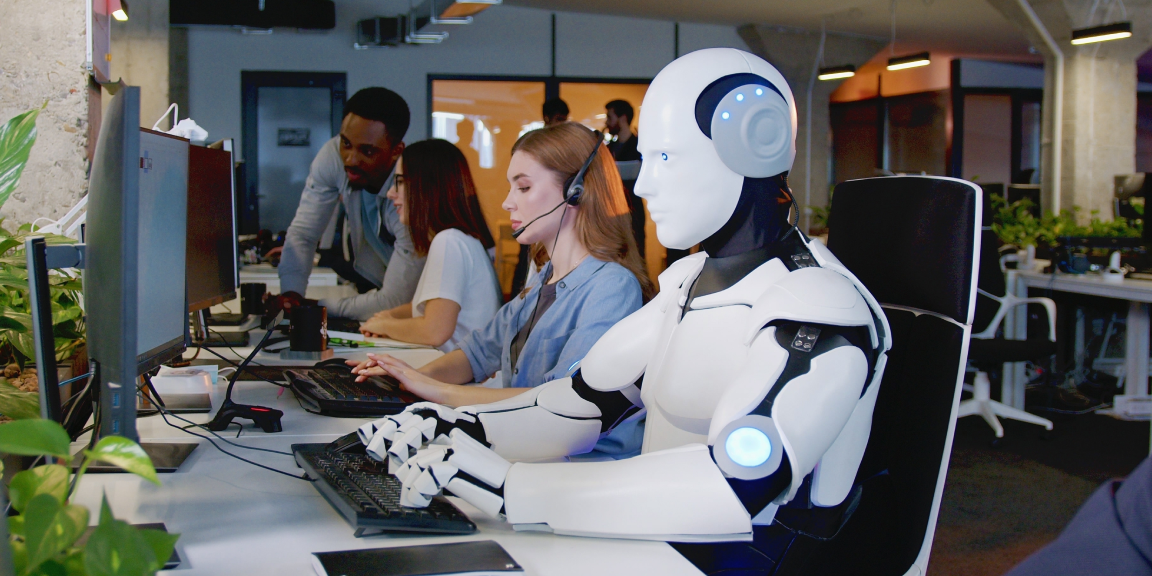
Artificial Intelligence (AI) has rapidly evolved in recent years, revolutionizing various industries and transforming the way we live and work. As AI technology becomes more advanced, there is growing concern about its impact on jobs and the future of work.
In this article, we will explore the potential effects of AI on employment. We will examine the jobs that are most likely to be affected by AI, the skills that will become more valuable in the AI era, and the potential opportunities and challenges that AI presents for the workforce. Additionally, we will discuss the role of policymakers and businesses in ensuring a smooth transition to an AI-driven economy.
Artificial Intelligence (AI) will automate repetitive tasks, freeing up humans to focus on more complex and creative work.
Artificial Intelligence (AI) has become an integral part of our lives, revolutionizing various industries and transforming the way we work. One of the key areas where AI has had a significant impact is in the job market. With advancements in technology, AI has the potential to automate repetitive tasks, allowing humans to shift their focus towards more complex and creative work.
AI-powered automation has already started to reshape the workforce across different sectors. Tasks that were previously performed by humans can now be efficiently handled by machines, leading to increased efficiency and productivity. This has the potential to streamline operations and reduce costs for companies.
However, the rise of AI automation has also raised concerns about the potential impact on jobs. Many fear that AI will replace human workers, leading to widespread unemployment. While it is true that certain jobs may become obsolete due to automation, AI also presents new opportunities for employment.
Impact on Job Roles
AI automation is most likely to affect jobs that involve repetitive and predictable tasks. These include roles in manufacturing, transportation, and customer service, among others. Jobs that can be easily automated may see a decline in demand.
On the other hand, AI is also creating new job roles and opportunities. As AI technology continues to evolve, there is a growing demand for professionals who can develop, maintain, and enhance AI systems. This includes roles such as AI engineers, data scientists, and machine learning specialists.
Related Posts



Furthermore, AI is also enabling the creation of new industries and sectors. Companies specializing in AI technologies, such as Artificial Plaza, are emerging and driving innovation. These companies are creating new job opportunities and contributing to economic growth.
The Importance of Upskilling
As AI continues to advance, it is crucial for individuals to adapt and upskill themselves to remain relevant in the job market. While certain jobs may be automated, there will always be a need for human skills such as critical thinking, problem-solving, and creativity.
Investing in education and training programs that focus on AI-related skills can help individuals stay competitive. This includes learning programming languages, data analysis, and understanding AI algorithms. By upskilling, individuals can position themselves for new job opportunities and ensure long-term career growth.
The Future of Work
As AI technology continues to evolve, it is important to embrace its potential while addressing the challenges it presents. The future of work will involve a collaboration between humans and AI systems, where each complements the other’s strengths.
While AI automation may eliminate certain job roles, it also has the potential to create new ones. It is important for individuals, companies, and governments to adapt to this changing landscape and invest in the necessary resources to ensure a smooth transition.
In conclusion, AI automation will undoubtedly have an impact on jobs. However, rather than fearing job loss, it is essential to recognize the opportunities that AI presents. By upskilling and embracing the potential of AI, individuals can navigate the changing job market and thrive in the future of work.
AI will create new job opportunities by driving innovation and the development of new technologies.
Artificial Intelligence (AI) has been a topic of discussion and debate in recent years. Many people are concerned about the impact of AI on job opportunities, fearing that it may lead to widespread unemployment. However, contrary to popular belief, AI is not a threat to jobs but rather a catalyst for innovation and the creation of new job opportunities.
AI has the potential to revolutionize various industries, including healthcare, transportation, finance, and manufacturing. By automating repetitive tasks and streamlining processes, AI can enhance productivity and efficiency in these sectors. As a result, companies can allocate their resources more effectively, leading to the growth of existing jobs and the creation of new ones.
AI-driven innovation in healthcare
One area where AI is making a significant impact is healthcare. With the ability to analyze vast amounts of medical data, AI can assist doctors in diagnosing diseases more accurately and developing personalized treatment plans. Additionally, AI-powered robots can perform complex surgeries with precision, reducing the risk of human error.
Moreover, AI can improve patient care by monitoring vital signs and alerting healthcare professionals of any abnormalities. This technology allows medical staff to focus on providing quality care and developing innovative solutions, ultimately leading to better patient outcomes.
AI’s influence on transportation
The transportation industry is also experiencing the transformative power of AI. Self-driving cars, powered by AI algorithms, have the potential to revolutionize transportation systems. These vehicles can improve road safety by eliminating human error and reducing the number of accidents caused by driver fatigue or distractions.
Furthermore, AI can optimize traffic flow and reduce congestion by analyzing real-time data from sensors and cameras. This technology enables transportation authorities to make informed decisions and implement efficient traffic management strategies.
AI’s impact on finance and manufacturing
In the finance sector, AI-powered algorithms can analyze vast amounts of financial data and make accurate predictions. This technology is used for fraud detection, risk assessment, and portfolio management. By automating these tasks, financial institutions can improve their efficiency and enhance customer experience.
In manufacturing, AI-powered robots and machines can perform complex tasks with precision and speed. This automation increases productivity and reduces the risk of human error. As a result, companies can meet consumer demands more efficiently and develop innovative products.
In conclusion, AI is not a threat to jobs but rather a driving force behind innovation and the creation of new job opportunities. By automating repetitive tasks and streamlining processes, AI enhances productivity and efficiency in various industries. As a result, existing jobs can grow, and new jobs can be created. Embracing AI and its potential can lead to a more prosperous and technologically advanced future.
AI will enhance productivity and efficiency in industries, leading to economic growth and job creation.
Artificial Intelligence (AI) is revolutionizing various industries, and its impact on jobs is a topic of great interest and concern. While some fear that AI will replace human workers, the reality is that AI has the potential to enhance productivity and efficiency in industries, leading to economic growth and job creation.
One of the main ways AI can improve productivity is through automation. AI-powered systems can perform repetitive and mundane tasks more efficiently and accurately than humans. This allows employees to focus on more complex and creative tasks that require human intelligence and decision-making. As a result, companies can increase their output and efficiency, leading to higher profits and potential for expansion.
Moreover, AI can also help businesses make better decisions by analyzing vast amounts of data and providing valuable insights. This can lead to improved customer experiences, optimized supply chains, and more effective marketing strategies. In turn, these improvements can drive business growth and create new job opportunities in areas such as data analysis, AI development, and AI implementation.
Furthermore, AI has the potential to revolutionize industries by enabling the development of new products and services. For example, AI-powered chatbots and virtual assistants are becoming increasingly common in customer service roles. These AI systems can handle customer inquiries and provide support 24/7, reducing the need for human customer service representatives. However, this doesn’t necessarily mean that these jobs will disappear. Instead, it opens up opportunities for individuals to specialize in training and managing these AI systems.
It’s important to note that while AI may replace certain jobs, it also creates new ones. As technology advances, the demand for skilled professionals in AI-related fields, such as machine learning, data science, and robotics, will increase. Additionally, AI will require human supervision and maintenance, ensuring that the technology operates safely and ethically. This creates a need for individuals with expertise in AI governance and ethics.
In conclusion, while the impact of AI on jobs is undeniable, it’s crucial to approach it with a balanced perspective. AI has the potential to enhance productivity, drive economic growth, and create new job opportunities. Rather than fearing job loss, individuals should focus on acquiring the necessary skills to thrive in an AI-driven world. By embracing AI and leveraging its capabilities, we can unlock new possibilities and shape a future where humans and AI work together harmoniously.
AI will require humans to acquire new skills and adapt to changing job requirements.
Artificial Intelligence (AI) has undoubtedly revolutionized various industries, including healthcare, finance, and transportation. However, this rapid advancement in AI technology has sparked concerns about its impact on jobs. While AI has the potential to automate certain tasks and improve efficiency, it also requires humans to acquire new skills and adapt to changing job requirements.
One of the main concerns regarding AI is the fear that it will replace human workers, leading to widespread unemployment. While it is true that AI can automate repetitive and mundane tasks, it is unlikely to completely replace human jobs. Instead, AI is more likely to augment human capabilities and create new job opportunities.
As AI technology continues to evolve, it is expected that certain jobs will become obsolete. However, new jobs will also emerge, requiring skills that are uniquely human. These skills include creativity, critical thinking, emotional intelligence, and problem-solving abilities. AI cannot replicate these skills, making them highly valuable in the workforce.
The Role of AI in Job Transformation
AI has the potential to transform jobs in various ways. It can automate routine tasks, freeing up human workers to focus on more complex and meaningful work. For example, in the healthcare industry, AI can automate administrative tasks, allowing healthcare professionals to spend more time on patient care and complex diagnoses.
Moreover, AI can enhance decision-making processes by analyzing vast amounts of data and providing valuable insights. This can be particularly beneficial in industries such as finance, where AI algorithms can detect patterns and trends that humans may overlook.
Additionally, AI can improve efficiency and productivity by streamlining processes and reducing errors. This can be seen in manufacturing, where AI-powered robots can perform tasks with precision and accuracy, leading to increased productivity.
The Importance of Acquiring New Skills
As AI continues to evolve and become more integrated into various industries, it is crucial for individuals to acquire new skills to remain relevant in the job market. This includes developing expertise in areas such as data analysis, machine learning, and programming.
Furthermore, soft skills such as communication, adaptability, and collaboration will become increasingly important. These skills are essential for effectively working alongside AI systems and leveraging their capabilities.
In conclusion, while AI may lead to job transformations and certain jobs becoming obsolete, it also presents new opportunities for individuals to acquire new skills and adapt to changing job requirements. By embracing AI technology and continuously developing their skills, individuals can thrive in the evolving job market and contribute to the advancement of AI-powered industries.
AI will lead to job displacement in certain industries, but it will also create new jobs in AI-related fields.
Artificial Intelligence (AI) is revolutionizing various industries and changing the way we live and work. While AI offers numerous benefits and opportunities, it also raises concerns about job displacement.
AI technologies, such as machine learning and natural language processing, have the potential to automate repetitive tasks and make certain job roles obsolete. For example, AI-powered chatbots can handle customer inquiries, reducing the need for human customer service representatives. Similarly, advancements in robotics can lead to the automation of manual labor jobs.
However, it’s important to note that AI will not eliminate jobs entirely. Instead, it will lead to job displacement, requiring individuals to adapt and acquire new skills to remain relevant in the evolving job market. In fact, AI is expected to create new job opportunities in AI-related fields.
The Rise of AI-Related Jobs
As AI continues to advance, there will be a growing demand for professionals with expertise in AI technologies. Companies will need skilled individuals to develop, implement, and maintain AI systems. This includes data scientists, machine learning engineers, AI researchers, and AI specialists.
Additionally, AI will create jobs in industries that support AI development and implementation. For example, companies specializing in AI tools and technologies will require software engineers and developers. AI training programs and educational institutions will also emerge to meet the demand for AI-related skills.
Job Transformation and Upskilling
While some jobs may be at risk of displacement, AI will also transform existing job roles, making them more efficient and allowing workers to focus on higher-value tasks. For example, AI can automate data analysis, freeing up professionals in fields such as finance and healthcare to focus on strategic decision-making.
To adapt to the changing job landscape, individuals will need to upskill and acquire new competencies. This may involve learning AI technologies, data analysis, programming, or other skills that complement AI systems. Lifelong learning and continuous professional development will become essential to stay competitive in the job market.
The Importance of Human Skills
Despite the advancements in AI, certain skills will remain in high demand. Soft skills such as creativity, critical thinking, problem-solving, and emotional intelligence are difficult to automate and will continue to be valued in the workplace. These skills complement AI technologies and enable humans to work alongside AI systems effectively.
In conclusion, AI will undoubtedly lead to job displacement in certain industries. However, it will also create new job opportunities in AI-related fields. To navigate the changing job market, individuals must be willing to adapt, upskill, and embrace lifelong learning. Additionally, the importance of human skills cannot be understated, as they will continue to be valuable alongside AI technologies.
Frequently Asked Questions
1. Will artificial intelligence replace human jobs?
No, AI will not replace all human jobs. It will automate certain tasks, but new jobs will also be created.
2. Which industries will be most affected by AI?
Industries such as manufacturing, transportation, healthcare, and customer service are expected to be significantly impacted by AI.
3. How can workers adapt to the changes brought by AI?
Workers can adapt by acquiring new skills that complement AI technologies and focusing on tasks that require creativity, critical thinking, and emotional intelligence.
4. What are the potential benefits of AI in the workplace?
AI can increase productivity, improve efficiency, enhance decision-making, and enable workers to focus on more complex and strategic tasks.