
Prompt engineering is an integral part of the AI ecosystem, serving as the bridge between human intent and machine comprehension.
This article delves into the various techniques of prompt engineering, exploring their applications, strengths, and the subtleties involved in their implementation.
1. Overview of Prompt Engineering Techniques: From Simple to Complex
1.1 Introduction to Prompt Engineering Techniques
- Defining the Spectrum: Prompt engineering techniques vary widely, each tailored to specific types of AI systems and user requirements. This section introduces the broad spectrum of these techniques, from basic, straightforward methods to complex, nuanced strategies.
- Role in AI Communication: Understanding the role these techniques play in facilitating effective communication between AI systems and users, setting the stage for the discussion of individual methods.
1.2 Basic Prompting Techniques
- Foundational Approaches: Covering the foundational approaches in prompt engineering, such as direct command prompts used in simple task-based AI systems.
- Examples and Applications: Providing real-world examples of where these basic techniques are effectively employed, such as in voice-activated assistants or basic chatbots.
1.3 Intermediate Techniques
- Beyond Basics: Transitioning to more sophisticated techniques that incorporate a moderate level of complexity and are used in more advanced AI systems.
- Illustrative Use Cases: Discussing use cases such as interactive customer service systems or recommendation engines, where intermediate prompting techniques are essential.
1.4 Advanced Prompting Techniques
- High-Complexity Strategies: Delving into the more complex prompting techniques that are employed in cutting-edge AI applications. This includes prompts that require the AI to perform deep analysis, generate creative outputs, or handle multifaceted tasks.
- Case Studies and Examples: Exploring case studies and examples that illustrate the application and effectiveness of these advanced techniques in areas such as autonomous systems, creative writing AI, and complex decision-making tools.
1.5 The Evolution of Prompting Techniques
- Historical Context: Providing a brief historical perspective on how prompt engineering techniques have evolved alongside advancements in AI technology.
- From Rigidity to Flexibility: Highlighting the shift from rigid, formulaic prompts to more flexible, context-aware approaches, reflecting the increasing sophistication of AI systems.
1.6 Future Directions in Prompt Engineering
- Emerging Trends: Discussing emerging trends and potential future developments in prompt engineering techniques. This might include the integration of AI with other technologies like augmented reality or the application of quantum computing in AI.
- Challenges and Opportunities: Addressing the challenges that lie ahead in developing new prompting techniques and the opportunities these challenges present for innovation in AI communication and interaction.
2. Zero-Shot and One-Shot Prompting: Basics and Applications
2.1 Understanding Zero-Shot and One-Shot Prompting
- Conceptual Foundations: Zero-shot prompting involves presenting an AI system with a task it has not seen during its training, expecting it to apply its general understanding to generate a relevant response. One-shot prompting, in contrast, provides the AI with a single example or template to guide its response, relying on this example to set a pattern for the task.
- Distinguishing Between the Two: Highlighting the key differences between zero-shot and one-shot prompting, especially in terms of their reliance on pre-existing knowledge and examples.
2.2 The Mechanics of Zero-Shot Prompting
- How Zero-Shot Prompting Works: Exploring the underlying mechanics of how AI systems handle zero-shot prompts, including the role of generalized models and inference capabilities.
- Strengths and Limitations: Discussing the strengths, such as flexibility and adaptability, and limitations, like potential inaccuracies or overgeneralizations, of zero-shot prompting.
2.3 The Dynamics of One-Shot Prompting
- Operational Aspects of One-Shot Prompting: Delving into the operational details of one-shot prompting, including how AI systems utilize the provided example to inform their responses.
- Applications and Effectiveness: Examining the effectiveness of one-shot prompting in various AI applications, highlighting areas where this technique excels and where it might fall short.
2.4 Practical Applications in Various Domains
- Zero-Shot Prompting Use Cases: Providing examples of zero-shot prompting in action, such as in general knowledge Q&A systems, novel problem-solving, or dealing with emergent topics.
- One-Shot Prompting in Practice: Exploring real-world applications of one-shot prompting, such as in content generation, style mimicry in art or writing, and specific task training for AI systems.
2.5 Challenges and Considerations
- Navigating Challenges: Addressing the challenges inherent in both zero-shot and one-shot prompting, such as ensuring relevance and accuracy in responses and dealing with the unpredictability of AI outputs.
- Considerations for Effective Use: Offering insights into considerations for effectively employing these techniques, including understanding the context, the AI system’s capabilities, and the intended application.
2.6 Future Prospects and Developments
- Advancements on the Horizon: Speculating on future advancements in zero-shot and one-shot prompting, considering emerging AI technologies and evolving machine learning models.
- Potential Impact on AI Evolution: Discussing how these advancements could impact the overall evolution of AI, potentially leading to more autonomous, efficient, and intelligent systems.
3. Creative Writing and Storytelling: Using Prompts for Narrative Creation
3.1 The Art of Prompting for Creative Writing and Storytelling
- Foundations of Creative AI: Introducing the concept of using AI for creative writing and storytelling, and the role of prompt engineering in guiding AI to produce creative content.
- Balancing Guidance and Creativity: Discussing the balance between providing enough guidance to steer the AI and leaving enough room for creative freedom, a crucial aspect of prompt engineering in creative applications.
3.2 Techniques in Prompting for Creativity
- Crafting Inspirational Prompts: Detailing the techniques used to craft prompts that inspire creativity in AI systems, including the use of evocative language, thematic cues, and narrative structures.
- Variations in Prompt Styles: Exploring how different styles of prompts can lead to varied narrative outcomes, from structured, genre-specific stories to more abstract, experimental pieces.
3.3 Case Studies of AI-Generated Narratives
- Success Stories: Presenting case studies of successful narrative creation using AI, where prompt engineering played a key role in shaping the output.
- Analysis of Prompts and Outcomes: Analyzing the prompts used in these cases and the resulting narratives, offering insights into what makes an effective prompt for creative AI applications.
3.4 The Role of AI in Enhancing Creativity
- AI as a Collaborative Tool: Discussing how AI, when effectively prompted, can act as a collaborator in the creative process, enhancing and augmenting human creativity.
- Expanding the Boundaries of Storytelling: Exploring how AI can push the boundaries of traditional storytelling, creating novel narratives that might not emerge from human writers alone.
3.5 Challenges in Prompting for Creative Outputs
- Navigating Unpredictability: Addressing the challenges of unpredictability in AI-generated creative content and strategies to manage it through careful prompt design.
- Maintaining Originality and Quality: Discussing the importance of originality and quality in AI-generated narratives and how prompts can be engineered to uphold these standards.
3.6 Future Directions in AI-Driven Creativity
- Emerging Trends and Technologies: Looking at emerging trends in AI-driven creativity and the potential impact of new technologies on the way narratives are crafted and generated.
- Potential for New Forms of Storytelling: Speculating on how advancements in AI and prompt engineering could lead to new forms of storytelling, interactive narratives, and cross-media experiences.
4. Advanced Techniques: Chain-of-Thought and Iterative Prompting
4.1 Introduction to Advanced Prompting Techniques
- Beyond Basic Prompting: This section introduces the concept of advanced prompting techniques such as chain-of-thought and iterative prompting, which are used for more complex AI interactions requiring detailed reasoning or creative problem-solving.
- Significance in AI Development: Discussing the significance of these techniques in the development of more sophisticated and autonomous AI systems.
4.2 Chain-of-Thought Prompting
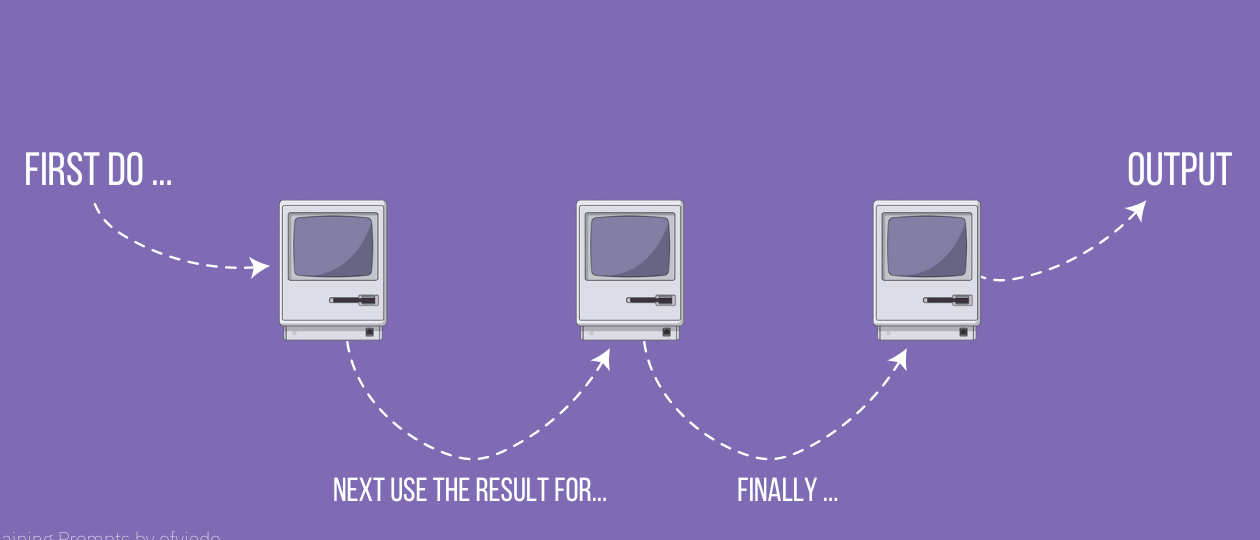
- Mechanics of Chain-of-Thought Prompting: Exploring how chain-of-thought prompting works by guiding AI through a series of logical steps or thought processes, enabling it to handle complex tasks that require reasoning.
- Applications and Examples: Providing examples of where chain-of-thought prompting is particularly effective, such as in mathematical problem-solving, complex decision-making scenarios, or detailed data analysis.
4.3 Iterative Prompting
- Understanding Iterative Prompting: Detailing how iterative prompting involves refining or evolving prompts based on previous AI responses, creating a dynamic interaction that progressively improves the AI’s output.
- Use Cases and Effectiveness: Discussing use cases such as creative content generation, where each iteration leads to more refined and targeted results, or scientific research, where iterative prompting aids in hypothesis testing and exploration.
4.4 Combining Techniques for Enhanced Outcomes
- Synergistic Use of Techniques: Exploring how combining chain-of-thought and iterative prompting can lead to enhanced outcomes, particularly in tasks that require both creative and logical reasoning.
- Case Studies: Presenting case studies where a combination of these techniques has been employed successfully, analyzing the prompts used and the AI’s responses.
4.5 Challenges in Advanced Prompting
- Navigating Complexity: Addressing the challenges inherent in crafting and managing complex prompts, such as ensuring clarity and maintaining the AI’s focus on the intended task.
- Quality Control and Consistency: Discussing the importance of maintaining quality and consistency in AI responses when using advanced prompting techniques, and strategies to achieve this.
4.6 Future Prospects in Advanced Prompting
- Emerging Trends and Innovations: Looking at emerging trends and potential innovations in advanced prompting techniques, considering the rapid advancements in AI and machine learning.
- Anticipating Future Applications: Speculating on future applications of these advanced techniques, including potential breakthroughs in AI capabilities and new areas where they could be applied.
5. Summarization and Translation: Specialized Prompting Strategies
5.1 The Role of Prompt Engineering in Summarization and Translation
- Importance in Specialized AI Tasks: Introducing how prompt engineering plays a crucial role in specialized AI tasks such as summarization and translation, which require a deep understanding of context, language nuances, and user intent.
- Unique Challenges: Highlighting the unique challenges in these areas, such as capturing the essence of a text in summarization and dealing with linguistic subtleties in translation.
5.2 Techniques in Prompting for Summarization
- Crafting Effective Summarization Prompts: Discussing the art of creating prompts that guide AI to distill key information from texts, focusing on brevity, relevance, and comprehensiveness.
- Application Scenarios: Exploring various application scenarios where summarization prompts are used, such as news aggregation, academic research, and information synthesis for business intelligence.
5.3 Prompting Strategies for Translation
- Navigating Linguistic Nuances: Delving into the techniques for crafting prompts that help AI navigate linguistic nuances, idiomatic expressions, and cultural references in translation tasks.
- Use Cases in Global Communication: Examining the use of translation prompts in scenarios like international communications, multilingual content creation, and localization of digital content.
5.4 Balancing Brevity and Accuracy
- Key Considerations in Summarization and Translation: Discussing how to balance brevity and accuracy in prompts for summarization and translation, ensuring that the AI captures the intended meaning without oversimplifying or misrepresenting the content.
- Techniques for Optimal Balance: Providing insights into techniques and best practices for achieving this balance, based on the type of text and the intended use of the output.
5.5 Addressing Contextual and Cultural Differences
- Understanding Contextual Importance: Emphasizing the importance of context in both summarization and translation tasks and how prompts can be engineered to make AI systems context-aware.
- Handling Cultural Sensitivities: Exploring strategies for handling cultural sensitivities and differences in translation prompts, ensuring that translations are not only linguistically accurate but also culturally appropriate.
5.6 Future Trends in Summarization and Translation AI
- Emerging Technologies and Approaches: Looking at emerging technologies and approaches in AI that could influence future trends in prompting for summarization and translation.
- Anticipating Evolving Needs: Discussing how the evolving needs of global communication and information management might shape the development of new prompting strategies in these specialized areas.
Conclusion
Prompt engineering is a dynamic and multifaceted field that sits at the crossroads of technology and creativity.
Its techniques range from the straightforward to the highly complex, each suited to different AI applications and objectives.
As AI continues to advance, the art of prompt engineering will undoubtedly evolve, offering new challenges and opportunities in guiding AI systems to better understand and interact with the world.