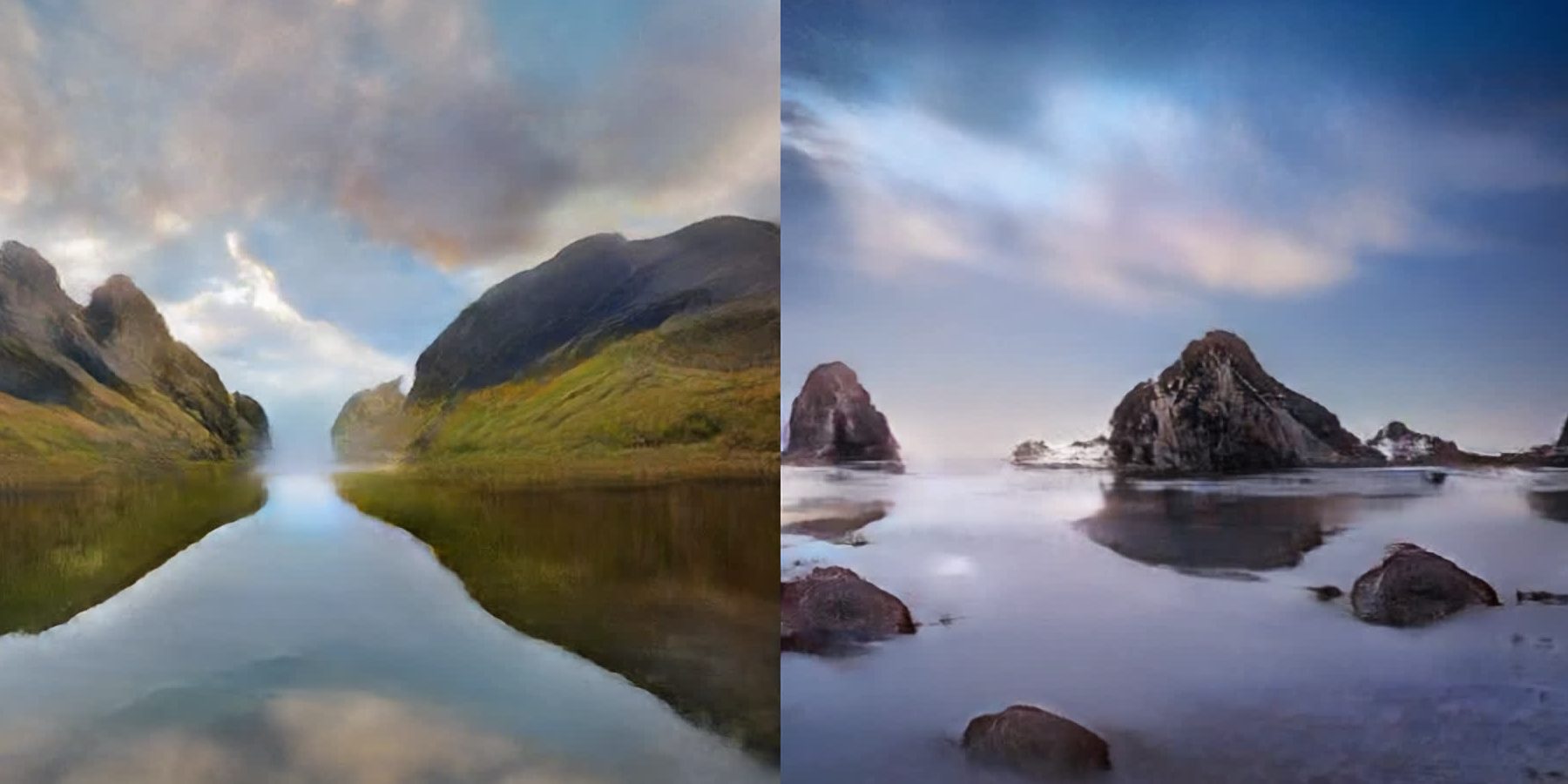
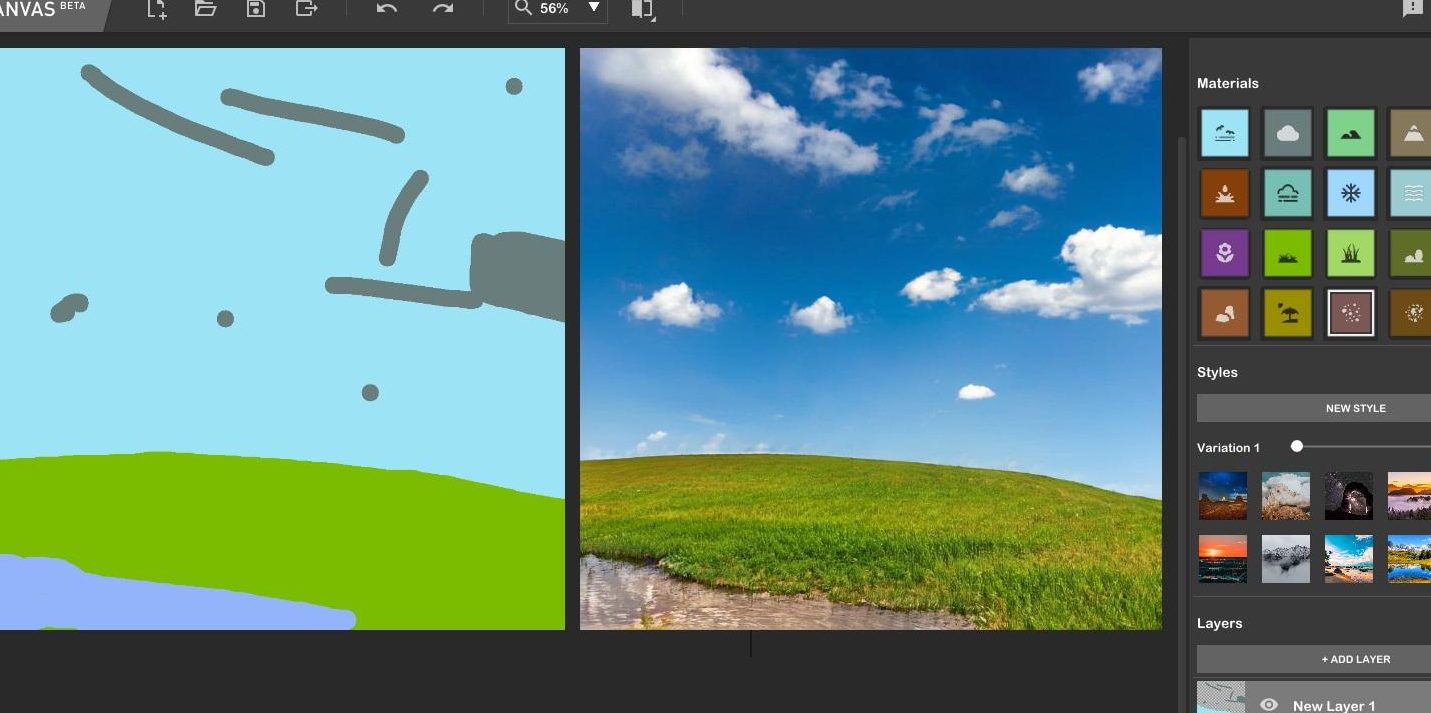
NVIDIA Canvas is a groundbreaking software tool that utilizes artificial intelligence (AI) to transform simple brushstrokes into lifelike landscape images. Developed by NVIDIA, a leader in graphics processing technology, Canvas is part of their broader initiative to integrate AI into creative processes.
Introduction to NVIDIA Canvas
NVIDIA Canvas operates on the principle of using AI to assist artists and creators. The software harnesses NVIDIA’s powerful GPUs and its AI painting tool, GauGAN, named after the post-impressionist painter Paul Gauguin. GauGAN leverages a form of AI known as a generative adversarial network (GAN) to turn sketches into photorealistic images.
Features and Capabilities
- AI-Powered Transformation: Canvas allows users to paint simple shapes and lines, which the AI then converts into realistic landscape images. The tool offers a variety of natural elements like trees, water, rocks, and skies.
- Real-Time Editing: One of the standout features is its real-time capability. Changes made in the sketch are instantly reflected in the AI-generated landscape, allowing for rapid iteration and experimentation.
- Material Palette: The software includes a diverse material palette. Users can select different textures and materials, such as grass, snow, or clouds, to apply to their sketches.
- Integration with Adobe Photoshop: NVIDIA Canvas can export creations into Adobe Photoshop, providing artists with the opportunity to refine their AI-generated images using advanced editing tools.
Use Cases
- Concept Art: Artists working in gaming, film, and other creative industries can use Canvas to rapidly generate landscape concepts.
- Educational Tool: It serves as an educational tool for those learning about art and AI.
- Hobbyist Creation: Hobbyists can explore their creativity, transforming simple doodles into stunning landscapes.
Technology Behind Canvas
NVIDIA Canvas is powered by NVIDIA’s deep learning models trained on millions of images. This training enables the AI to understand and interpret user inputs, converting them into realistic textures and elements. The GAN consists of two parts: a generator that creates images and a discriminator that evaluates them. Through this process, the AI learns to produce more accurate and lifelike results.
System Requirements
To use NVIDIA Canvas, users need a compatible NVIDIA GPU. The software is specifically designed to leverage the power of NVIDIA’s graphics cards, ensuring smooth performance and high-quality image generation.
Impact and Future Potential
NVIDIA Canvas represents a significant step forward in the intersection of AI and art. It not only democratizes art creation by making it more accessible but also opens up new possibilities for experienced artists to experiment with AI-assisted creation. Looking forward, the technology behind Canvas has the potential to evolve further, offering even more sophisticated and varied artistic tools.
Conclusion
NVIDIA Canvas is an impressive demonstration of how AI can augment human creativity. By transforming simple sketches into complex images, it offers a glimpse into the future of art and design, where AI and human creativity work hand in hand to create new forms of visual expression. As technology continues to advance, tools like NVIDIA Canvas will likely become an integral part of the creative process, blurring the lines between technology and art.