Model Context Protocol (MCP): a practical guide to connecting AI tools
If you build with AI, you eventually face the same issue: every new tool integration is custom, fragile, and expensive to maintain. The Model Context Protocol (MCP) addresses this by defining a standard way for models and agents to interact with external tools and data sources.
In this guide, we cover what MCP is, how it works in practice, where it helps most, and what to watch out for before production.
What MCP is (and why teams care)
MCP is a protocol that lets AI systems discover and use tools through a common interface. Instead of building one-off adapters for each model or workflow, teams can expose capabilities (files, APIs, databases, actions) in a structured way that an AI client can call consistently.
In practical terms, MCP helps with:
- Interoperability: one integration style across different tools.
- Speed: faster implementation of new automations.
- Maintainability: fewer custom bridges to debug over time.
- Governance: clearer boundaries on what tools an agent can access.
How MCP works in a real workflow
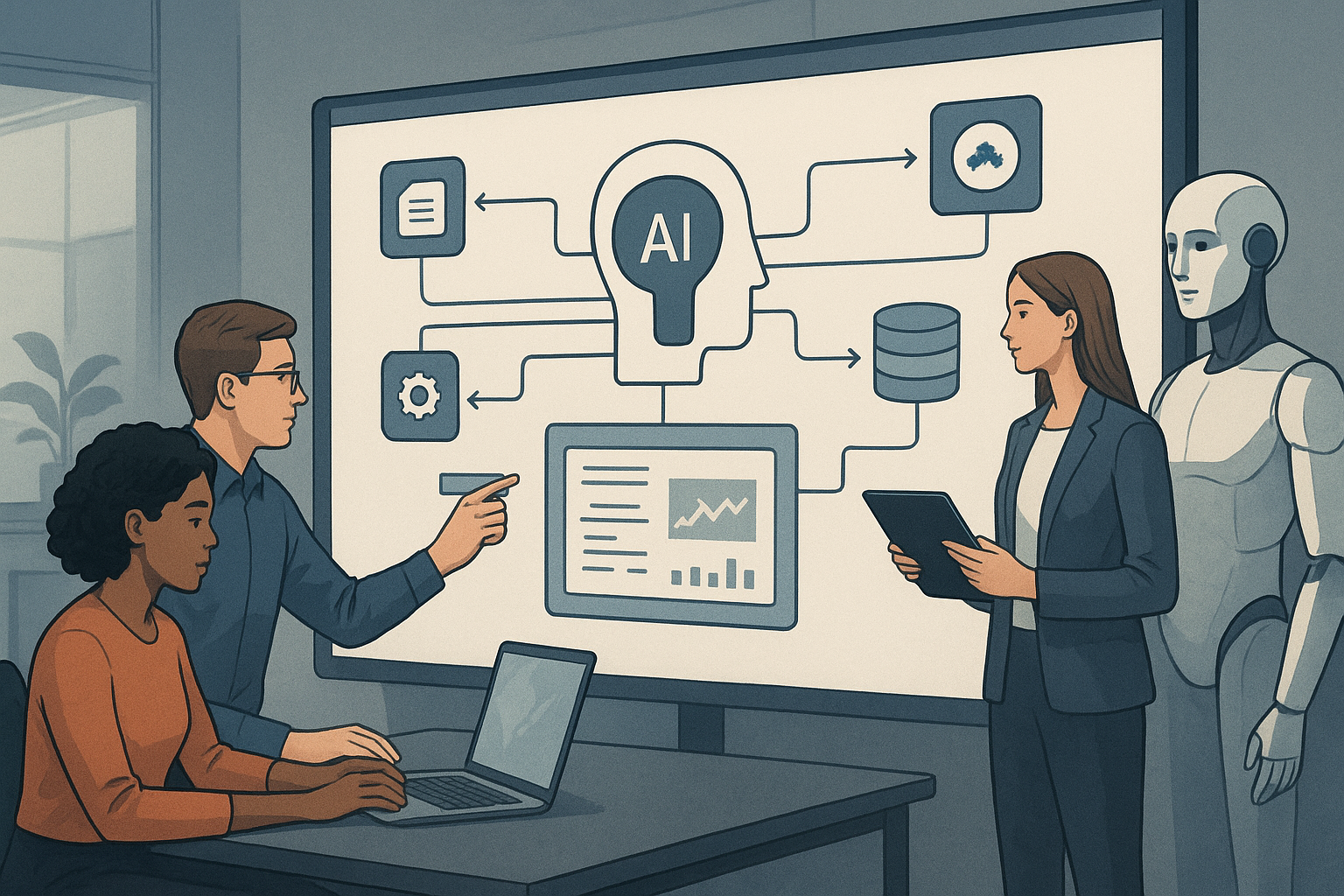
A typical setup includes:
- MCP host/client: the app or agent runtime where the model runs.
- MCP servers: connectors that expose tool capabilities.
- Tool calls: structured requests from the model to execute actions.
- Results: normalized outputs returned to the model context.
Example: an agent receives “prepare weekly product report.” Through MCP it can query analytics, fetch CRM notes, retrieve support trends, and draft a report in one orchestrated flow, instead of relying on brittle glue code.
Where MCP creates immediate value
MCP is especially useful when:
Related Posts




- You operate multiple internal tools and APIs.
- You need reproducible, auditable agent workflows.
- You want to switch model providers without rewriting all integrations.
- You are moving from isolated prompts to production-grade automation.
Common pitfalls and how to avoid them
- Overexposed permissions: start with least privilege and explicit scopes.
- Poor tool design: keep tool schemas simple and predictable.
- No observability: log tool calls, latency, failures, and retries.
- Version drift: version your MCP servers and deprecate cleanly.
MCP is not a magic layer. It improves integration discipline, but teams still need good API hygiene, access control, and evaluation practices.
Final take
MCP is quickly becoming a key building block for serious AI operations. If your roadmap includes agents, tool orchestration, or multi-system automation, adopting a protocol-first approach now can save major rework later.
Start small: one workflow, one measurable business outcome, strict permissions, and observable tool calls. Then scale.