
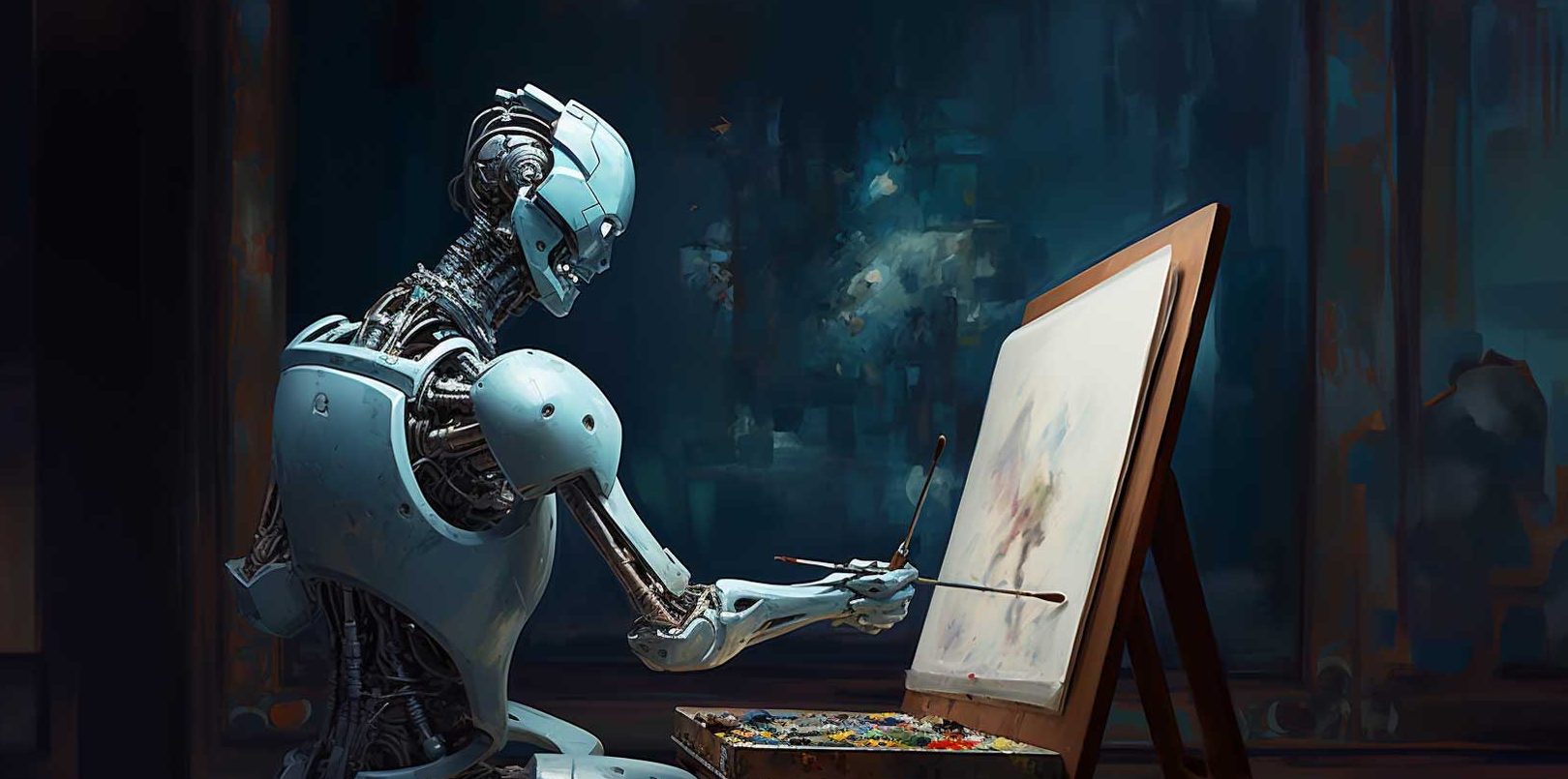
Artificial Intelligence (AI) has made tremendous advancements in recent years, with applications ranging from self-driving cars to voice assistants. One fascinating area where AI has made significant progress is in the field of art. AI can now generate stunning paintings, compose music, and even write poetry. However, teaching an AI to draw according to specific instructions is still a challenging task.
In this article, we will explore the process of teaching an AI to draw based on your instructions. We will discuss the techniques and algorithms used to train AI models to understand and interpret artistic instructions. Additionally, we will explore the various tools and platforms available to facilitate this process. By the end of this article, you will have a better understanding of how to harness the capabilities of AI to create unique and personalized artworks.
Use a deep learning model to train the AI on a large dataset of drawings
If you want to teach an AI to draw according to your instructions, one way to do it is by using a deep learning model. Deep learning models are designed to learn patterns and make predictions based on large datasets. In this case, you would need a large dataset of drawings that the AI can learn from.
There are various ways to obtain a dataset of drawings. You can collect drawings from various sources, such as online art communities or drawing applications. You can also use existing datasets that are available online, such as the Google Quick, Draw! dataset, which contains millions of drawings across various categories.
Once you have your dataset, you can use a deep learning framework like TensorFlow or PyTorch to train the AI model. The model will learn from the dataset and try to capture the patterns and styles of the drawings. The more diverse and representative the dataset is, the better the AI will be able to understand and replicate different drawing styles.
Define a set of instructions and labels for the AI to follow
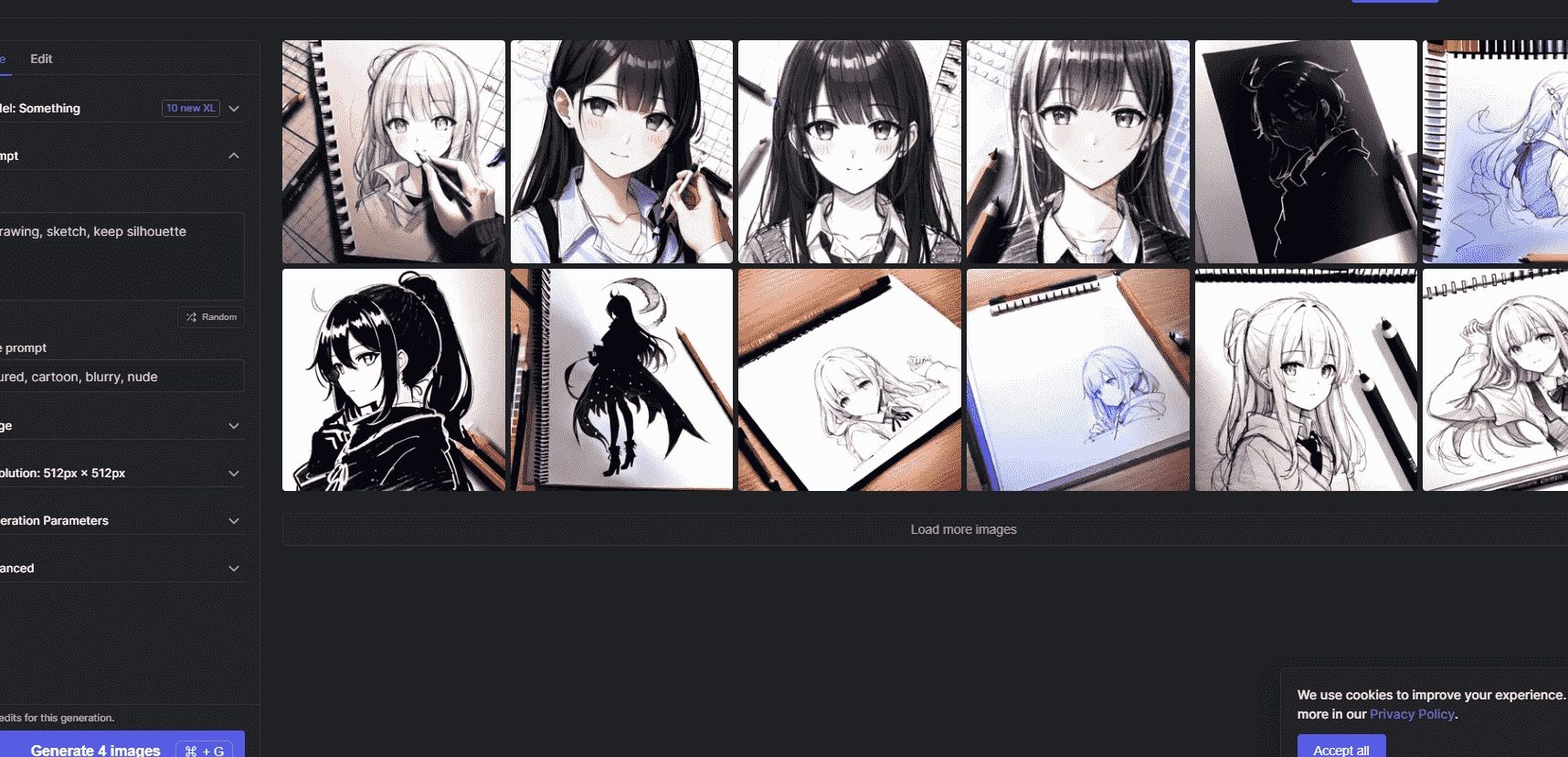
After training the AI on a dataset of drawings, you need to define a set of instructions and labels for the AI to follow. These instructions can be in the form of textual descriptions or sketches. For example, you can provide instructions like “draw a tree with green leaves” or “draw a cat playing with a ball“.
The labels are used to guide the AI in understanding the desired outcome of the instructions. For example, you can provide labels like “tree” or “cat” to help the AI identify the objects it needs to draw. The more specific and detailed the instructions and labels are, the better the AI will be able to generate accurate drawings.
Related Posts


Implement a feedback loop to improve the AI’s drawing capabilities
Teaching an AI to draw according to your instructions is an iterative process. You can start by giving the AI simple instructions and evaluate its output. If the AI’s drawings are not accurate or do not meet your expectations, you can provide feedback and make adjustments to the model.
One way to implement a feedback loop is by using a technique called reinforcement learning. In reinforcement learning, the AI receives feedback in the form of rewards or penalties based on the quality of its drawings. By adjusting the model based on this feedback, you can gradually improve the AI’s drawing capabilities.
Experiment with different techniques and models
Teaching an AI to draw is a creative process, and there are no fixed rules or techniques that guarantee success. It’s important to experiment with different techniques and models to find what works best for your specific requirements.
For example, you can try using different types of deep learning models, such as generative adversarial networks (GANs) or variational autoencoders (VAEs), to generate drawings. You can also explore transfer learning, where you fine-tune a pre-trained model on your specific drawing task.
Additionally, you can leverage the power of AI tools and technologies provided by companies like OpenAI, Amazon AI, Meta AI, Google AI, and Microsoft. These companies offer various AI technologies and platforms that can assist you in teaching an AI to draw.
Conclusion
Teaching an AI to draw according to your instructions is a fascinating and challenging task. By using a deep learning model, defining clear instructions and labels, implementing a feedback loop, and experimenting with different techniques and models, you can gradually improve the AI’s drawing capabilities. Remember to explore the resources and technologies offered by companies in the field of AI to enhance your AI teaching journey.
Provide clear and specific instructions for each drawing task
When teaching an AI to draw, it is important to provide clear and specific instructions for each drawing task. The AI relies on these instructions to understand what you want it to create. By being precise in your instructions, you can guide the AI to produce the desired outcome.
For example, if you want the AI to draw a cat, you can provide instructions such as “Draw a small circle for the head, two triangles for the ears, and a curved line for the body.” By breaking down the drawing into simple shapes and lines, you make it easier for the AI to comprehend and replicate.
Additionally, it is helpful to use descriptive language to guide the AI’s drawing process. Instead of simply saying “draw a line,” you can specify the length, direction, and curvature of the line. This level of detail ensures that the AI understands exactly what you envision.
Use reference images for inspiration
Inspiration can come from a variety of sources, and reference images are a valuable tool when teaching an AI to draw. By providing reference images, you give the AI a visual representation of what you have in mind. This helps the AI grasp the style, proportions, and details you want it to incorporate into the drawing.
For example, if you want the AI to draw a landscape, you can show it pictures of real landscapes or paintings for reference. This allows the AI to analyze the elements present in those images and apply them to its own drawing.
Remember, the AI learns from examples, so the more reference images you provide, the better it can understand your desired outcome.
Iterate and provide feedback
Teaching an AI to draw is an iterative process. As the AI generates drawings based on your instructions, it is important to review and provide feedback. This feedback helps the AI learn and improve its drawing skills over time.
When reviewing the AI’s drawings, focus on what it got right and what needs improvement. Provide specific feedback on areas such as proportions, details, and overall composition. By pinpointing areas for improvement, you guide the AI’s learning and help it create more accurate and satisfying drawings.
It is also beneficial to experiment with different instructions and styles. This allows the AI to explore a wider range of drawing techniques and develop its artistic abilities.
Explore AI drawing tools and platforms
There are various AI drawing tools and platforms available that can assist you in teaching an AI to draw. These tools provide pre-trained models and interfaces that simplify the process of instructing an AI to create drawings.
One popular AI drawing tool is Artificial Plaza’s drawing tool. It offers a user-friendly interface where you can input your instructions and see the AI’s interpretation of your commands in real-time.
Another helpful resource is Artificial Plaza’s technologies page, which provides information on the latest advancements in AI drawing technology. Exploring these platforms can enhance your teaching experience and provide you with additional resources to improve your AI’s drawing skills.
Learn from successful AI drawing companies
Looking at the achievements of successful AI drawing companies can provide valuable insights and inspiration for teaching your own AI to draw. Companies such as Artificial Plaza, OpenAI, Amazon AI, Meta AI, Google AI, and Microsoft and AI have made significant advancements in the field of AI drawing.
By studying their approaches, you can gain valuable insights into the techniques and strategies they employ to teach their AI models. This knowledge can help you refine your own teaching methods and improve the effectiveness of your AI drawing sessions.
Experiment with AI-generated drawings
AI-generated drawings can be a source of inspiration and creativity. By exploring the drawings generated by AI models, you can discover new ideas and styles that you may not have considered before.
Artificial Plaza’s ChatGPT is an example of an AI model that can generate drawings based on text prompts. By interacting with ChatGPT, you can explore the AI’s artistic capabilities and use its output as a starting point for your own drawings.
In conclusion, teaching an AI to draw requires clear instructions, reference images, feedback, exploration of AI tools and platforms, learning from successful AI drawing companies, and experimentation with AI-generated drawings. By following these steps, you can enhance your AI’s drawing skills and create unique and personalized artwork.
Break down complex instructions into simpler steps
When teaching an AI to draw according to your instructions, it’s important to break down complex instructions into simpler steps. This allows the AI to understand and follow the instructions more effectively.
One way to do this is by providing clear and concise instructions for each individual step. For example, instead of saying “draw a detailed landscape with mountains, trees, and a river,” you could break it down into smaller steps like “draw the outline of the mountains,” “add details to the trees,” and “draw the shape of the river.”
By breaking down the instructions in this way, you make it easier for the AI to process and execute each step accurately.
Provide visual references
In addition to breaking down complex instructions, it’s also helpful to provide visual references for the AI. This can be in the form of images or sketches that demonstrate what you want the AI to draw.
Visual references help the AI understand the desired outcome and provide a clear visual representation of what you’re trying to communicate. This is especially useful when teaching the AI more complex or abstract concepts.
For example, if you want the AI to draw a specific animal, you can provide images of that animal from different angles and in different poses. This helps the AI capture the essence of the animal and reproduce it accurately in its drawings.
Use reinforcement learning
Reinforcement learning is a technique that can be used to teach an AI to draw according to your instructions. It involves providing feedback and rewards to the AI based on its performance.
For example, you can set up a system where the AI receives positive reinforcement when it successfully follows an instruction and produces a drawing that matches your expectations. On the other hand, if the AI deviates from the instructions or produces a drawing that doesn’t meet your requirements, it can receive negative reinforcement.
This feedback loop helps the AI learn from its mistakes and improve its drawing skills over time. By providing consistent and constructive feedback, you can guide the AI towards producing drawings that align with your instructions.
Experiment and iterate
Teaching an AI to draw according to your instructions is an iterative process. It may take several attempts and adjustments to achieve the desired results.
As you teach the AI, don’t be afraid to experiment with different techniques and approaches. Try varying the complexity of the instructions, providing different types of visual references, and adjusting the reinforcement learning system.
Through experimentation and iteration, you can fine-tune the AI’s drawing abilities and improve its accuracy in following your instructions.
Conclusion
Teaching an AI to draw according to your instructions requires breaking down complex instructions, providing visual references, using reinforcement learning, and experimenting with different approaches. By following these steps, you can effectively teach an AI to create drawings that match your vision.
Continuously evaluate and provide feedback to the AI during the training process
Teaching an AI to draw according to your instructions can be an exciting and creative process. However, it requires continuous evaluation and feedback to ensure that the AI is learning and improving effectively.
During the training process, it is important to regularly assess the AI’s performance and provide feedback. This can be done by comparing the AI-generated drawings with your desired outcomes. Identify areas where the AI may be struggling or not fully capturing your instructions.
Once you have identified these areas, provide specific and constructive feedback to the AI. Be clear and explicit in explaining what you want to see in the drawings. Use strong and descriptive language to convey your instructions effectively.
For example, if you want the AI to draw a cat, you could say something like, “The cat should have pointy ears, a long tail, and whiskers that are curved upwards.” By providing detailed instructions, you help the AI understand your expectations better.
Remember to be patient with the AI’s progress. It may take time for the AI to grasp certain concepts or styles. Continuously evaluate its performance and adjust your instructions accordingly.
Additionally, consider using a combination of reinforcement learning and supervised learning techniques. Reinforcement learning allows the AI to learn from its own mistakes and improve over time. Supervised learning, on the other hand, uses labeled examples to guide the AI’s training process.
In conclusion, teaching an AI to draw according to your instructions requires continuous evaluation and feedback. Be specific and explicit in your instructions, and use a combination of reinforcement learning and supervised learning techniques to enhance the AI’s learning process.
Adjust the model’s parameters and architecture as needed
When teaching an AI to draw according to your instructions, it is important to adjust the model’s parameters and architecture as needed. This ensures that the AI understands and accurately interprets your instructions.
The parameters of the model refer to the values that control the behavior and performance of the AI. By tweaking these parameters, you can influence how the AI responds to different instructions and how it generates the final drawing.
Similarly, the architecture of the model determines its overall structure and organization. Different architectures may be better suited for specific drawing tasks or instructions. For example, a convolutional neural network (CNN) architecture is often used for image-related tasks, while a recurrent neural network (RNN) may be more suitable for generating sequential drawings.
It is important to experiment with different parameter settings and architectures to find the optimal configuration for your specific drawing task. This may involve adjusting the learning rate, the number of layers or units in the model, or even using pre-trained models as a starting point.
By fine-tuning the model’s parameters and architecture, you can enhance the AI’s ability to understand and accurately execute your instructions, resulting in more precise and customized drawings.
Utilize a diverse dataset for training
Another crucial aspect of teaching an AI to draw according to your instructions is to utilize a diverse dataset for training. A diverse dataset ensures that the AI is exposed to a wide range of drawing styles, techniques, and subject matter, enabling it to learn and generalize better.
When creating a dataset for training, it is important to include drawings from various artists, genres, and artistic movements. This helps the AI to capture the nuances and subtleties of different drawing styles, allowing it to adapt and generate drawings that align with your instructions.
In addition to diversity in drawing styles, it is also essential to include drawings that cover a wide range of subjects, such as landscapes, portraits, still life, and abstract art. This helps the AI to develop a comprehensive understanding of different subject matters and enables it to generate drawings that are contextually appropriate.
Furthermore, it is beneficial to include drawings with varying levels of complexity and detail. This challenges the AI to learn and reproduce intricate details accurately, resulting in more realistic and sophisticated drawings.
By utilizing a diverse dataset for training, you provide the AI with a rich and varied learning experience, enhancing its ability to generate drawings that align with your instructions and preferences.
Iterate and refine the training process
Teaching an AI to draw according to your instructions is an iterative process that requires constant refinement and improvement. It is important to closely monitor the AI’s performance and make adjustments to the training process as necessary.
During the training process, it is essential to regularly evaluate the AI’s outputs and compare them against your instructions. This allows you to identify areas where the AI may be struggling or misinterpreting your instructions. By pinpointing these areas, you can adjust the training data, model architecture, or parameters to address the issues and improve the AI’s performance.
Additionally, it is beneficial to incorporate feedback loops into the training process. This involves providing the AI with feedback on its outputs and using this feedback to refine its understanding and execution of your instructions. By continuously iterating and refining the training process, you can gradually enhance the AI’s ability to generate drawings that accurately reflect your instructions.
In conclusion, teaching an AI to draw according to your instructions requires adjusting the model’s parameters and architecture, utilizing a diverse dataset for training, and iterating and refining the training process. By following these steps, you can enhance the AI’s ability to understand and execute your instructions, resulting in customized and accurate drawings.
Frequently Asked Questions
Can an AI really learn to draw?
Yes, AI can learn to draw by analyzing and imitating existing drawings.
What kind of instructions can I give to the AI?
You can give the AI instructions such as specific shapes, colors, or styles to follow.
How long does it take for the AI to learn to draw according to my instructions?
The learning process can vary depending on the complexity of the instructions, but it typically takes several iterations for the AI to improve its drawing skills.
Can the AI create original drawings?
While the AI can imitate existing drawings, it may not be able to create completely original drawings without any reference.