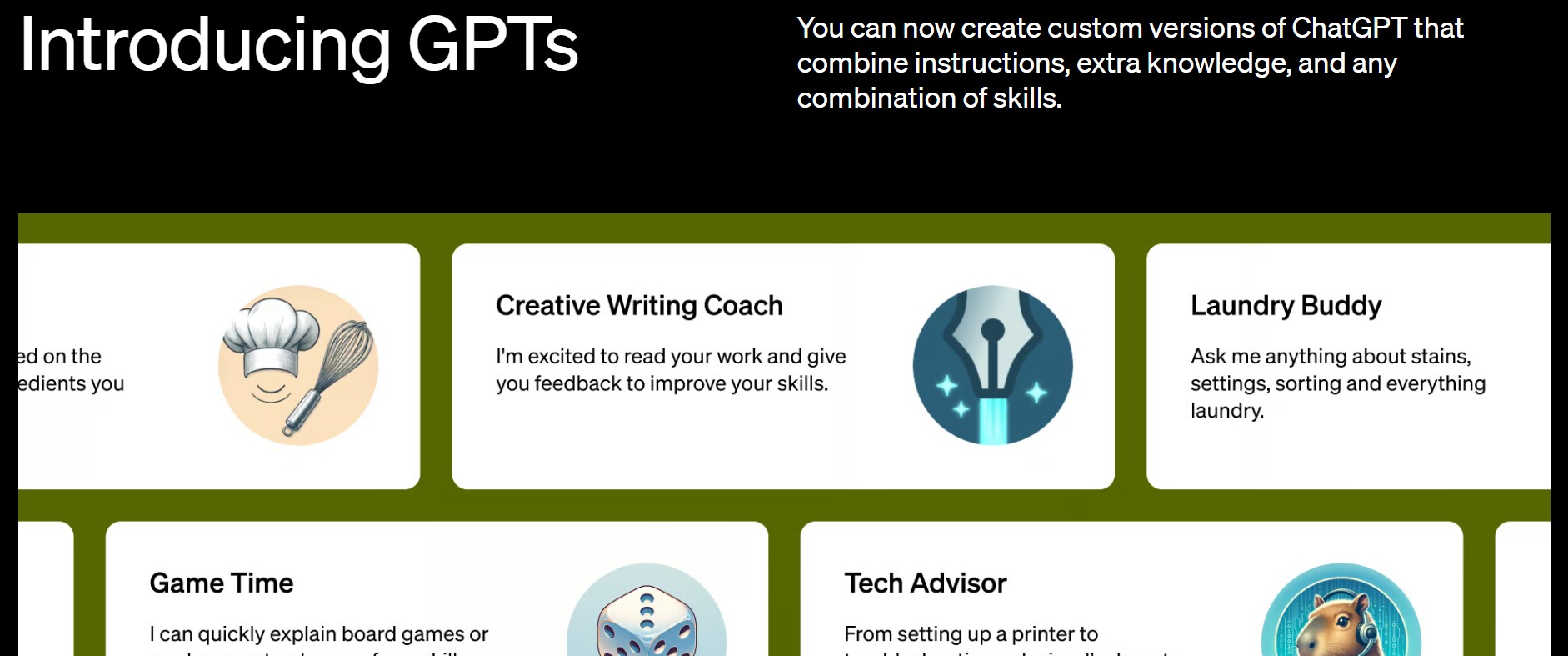
In an era of unprecedented technological advancement, OpenAI introduces a groundbreaking development in artificial intelligence: GPTs (Generative Pre-trained Transformers). This innovative offering allows users to create customized versions of ChatGPT for varied applications, marking a significant leap in personalized AI technology.
What are GPTs?
GPTs represent a new frontier in AI, enabling users to craft a version of ChatGPT tailored to specific needs and preferences. These customized AI models can assist in everyday tasks, professional activities, or leisure, adapting to individual or organizational requirements. The process is straightforward and user-friendly, requiring no coding skills, thus democratizing access to advanced AI technology.
Creating a GPT is as simple as initiating a conversation. Users provide instructions, impart additional knowledge, and select desired functionalities, such as web search capabilities, image creation, or data analysis. This intuitive process ensures that anyone, regardless of technical expertise, can benefit from this technology.Examples and Accessibility
GPTs are currently available for ChatGPT Plus and Enterprise users, featuring integrations like Canva and Zapier AI Actions. OpenAI plans to extend access to a broader audience shortly, further expanding the impact of this technology.
Customization and Community Involvement
The flexibility of GPTs allows users to tailor ChatGPT to fit specific needs, a feature highly requested since ChatGPT’s inception. OpenAI’s vision is that the most impactful and innovative GPTs will emerge from the community, encompassing educators, professionals, and enthusiasts alike.
The GPT Store: A Marketplace for Innovation
The imminent launch of the GPT Store will showcase public GPTs, offering a platform for creators to share their innovations. This marketplace aims to highlight the most useful and engaging GPTs across various categories, with the potential for creators to monetize their creations based on usage metrics.Privacy and Safety: Core Principles
OpenAI has built GPTs with a strong emphasis on privacy and safety. User interactions with GPTs remain confidential, and data sharing with third-party APIs is at the user’s discretion. Additionally, robust systems are in place to ensure compliance with usage policies and prevent the propagation of harmful content.
Related Posts


Future Developments and Societal Impact
OpenAI envisions GPTs evolving into agents capable of performing real-world tasks. This progression towards more autonomous systems necessitates careful consideration of technical, safety, and societal implications. OpenAI is committed to a thoughtful and incremental approach in this journey.Developer Opportunities and Enterprise Solutions
Developers can enhance GPTs by integrating custom actions through APIs, enabling real-world interactions and data integration. Enterprise clients, such as Amgen, Bain, and Square, are already utilizing internal GPTs for various business functions, highlighting the versatility and potential of these custom AI solutions.
Democratizing AI: A Collaborative Approach
OpenAI’s mission extends beyond technological advancement to include building a safer and more beneficial AGI (Artificial General Intelligence). By involving a diverse community in AI development, OpenAI aims to ensure that AI advancements align with a broad range of human values and needs.Enhancements to ChatGPT Plus
To improve user experience, ChatGPT Plus now includes updated information up to April 2023 and a streamlined model picker, integrating DALL·E, browsing, and data analysis functionalities into a single, user-friendly interface.
Conclusion
OpenAI’s introduction of GPTs marks a significant step towards a future where AI is not just a tool for the few but a customizable companion for the many. This initiative empowers users to shape AI in a way that resonates with their unique needs and aspirations, paving the way for a more inclusive and diverse AI landscape.