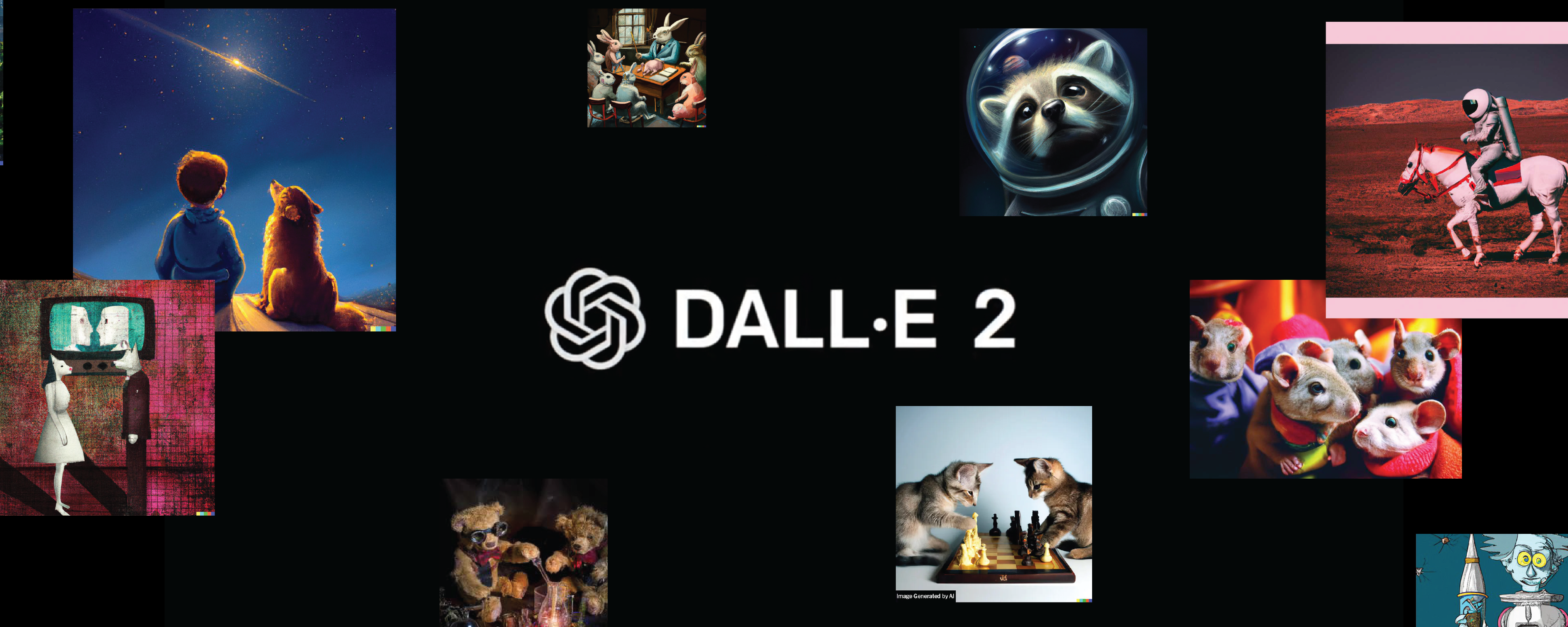
The advent of Dall-E 2 marks a significant advancement in the realm of artificial intelligence, particularly in the field of image generation. Developed by OpenAI, this enhanced version of the original Dall-E has garnered widespread attention for its improved capabilities and potential applications. Dall-E 2 stands as a testament to the rapid progress in AI technology and its increasing influence on creative industries.
Evolution from Dall-E to Dall-E 2
Dall-E 2 is an evolution of its predecessor, Dall-E, which was already a revolutionary tool capable of generating images from textual descriptions. The upgrade to Dall-E 2 involves significant improvements in image quality, resolution, and the model’s ability to understand and interpret complex prompts more effectively. These enhancements stem from refinements in the underlying algorithms and neural networks, building upon the success of the original model.
Enhanced Capabilities of Dall-E 2
One of the most notable enhancements in Dall-E 2 is its ability to produce more detailed and high-resolution images. This leap in image quality allows for more realistic and intricate visual outputs, making it an even more powerful tool for artists and designers. Additionally, Dall-E 2 exhibits a better understanding of nuanced prompts, enabling it to handle more abstract and creative requests with greater finesse.
Impact on Creative Expression and Commercial Applications
Dall-E 2’s advanced capabilities have profound implications for creative expression and commercial applications. It offers artists and designers an innovative platform for experimentation, enabling them to visualize concepts and ideas that were previously challenging or impossible to create. In commercial settings, Dall-E 2 has potential uses in graphic design, advertising, product visualization, and even in the creation of educational materials, offering a fast and versatile solution to visual content creation.
Ethical Considerations and Responsible Usage
With its enhanced capabilities, Dall-E 2 also brings renewed focus on ethical considerations. The potential for creating misleading or harmful content, intellectual property concerns, and the impact on traditional creative jobs are important issues that need addressing. OpenAI has implemented measures to mitigate potential misuse, including content filters and usage guidelines. However, the conversation around the ethical use of such powerful AI tools continues to be an important one.
The Future of Dall-E 2 and AI in Creativity
As AI technology continues to advance, the potential applications of tools like Dall-E 2 are bound to expand. Future iterations may offer even more sophisticated image generation capabilities, including the ability to integrate with other forms of media and AI technologies. The ongoing development of Dall-E 2 and similar tools will likely continue to reshape the landscape of digital art, design, and creative expression.
Conclusion
Dall-E 2 by OpenAI represents a remarkable stride forward in the field of AI and its application in creative domains. By pushing the boundaries of what’s possible in AI-driven image generation, Dall-E 2 not only enhances the toolkit available to artists and designers but also raises important discussions about the role of AI in creative industries. As this technology progresses, it holds the promise of further transforming how we conceive, visualize, and create visual content.