
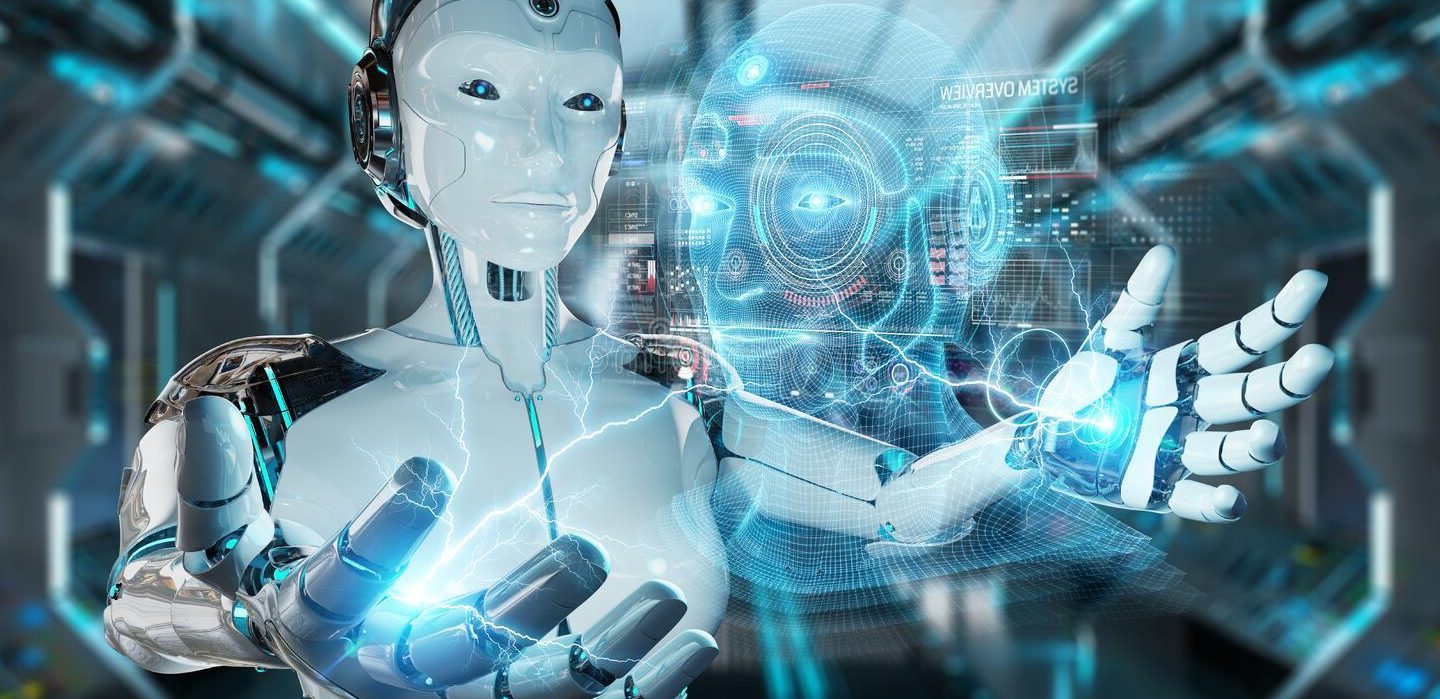
Artificial Intelligence (AI) has become one of the most talked-about technologies in recent years. It refers to the simulation of human intelligence in machines that are programmed to think and learn like humans. AI systems are designed to perform tasks that would normally require human intelligence, such as speech recognition, decision-making, problem-solving, and visual perception.
In this article, we will explore the key differences between AI and other systems, such as machine learning and deep learning. We will also delve into the inner workings of AI, including the different approaches and techniques used to build intelligent systems. Additionally, we will discuss the potential applications and challenges of AI, as well as its impact on various industries.
Artificial intelligence (AI) is a branch of computer science that focuses on creating intelligent machines that can simulate human behavior and perform tasks that would typically require human intelligence.
ArtificialPlaza.com
AI is different from other systems because it involves the development of machines that can learn, reason, and problem-solve on their own. Unlike traditional computer programs, AI systems can adapt and improve their performance based on experience.
There are various approaches to AI, including machine learning, natural language processing, computer vision, and expert systems. Machine learning is a subset of AI that focuses on enabling machines to learn from data and improve their performance over time. Natural language processing allows machines to understand and respond to human language, while computer vision enables machines to perceive and interpret visual information.
AI systems rely on algorithms and models to process and analyze data, make decisions, and perform tasks. These algorithms can be trained using large datasets to recognize patterns and make predictions. The models used in AI can be complex, such as neural networks, which are inspired by the human brain and can learn from vast amounts of data.
How Does AI Work?
AI systems work by collecting and analyzing large amounts of data to identify patterns and make predictions or decisions. This process involves several steps:
- Data Collection: AI systems require a vast amount of data to train and improve their performance. This data can come from various sources, such as sensors, databases, or the internet.
- Data Preprocessing: Before training an AI model, the collected data needs to be cleaned and prepared. This involves removing irrelevant or noisy data and transforming it into a suitable format for analysis.
- Model Training: Once the data is preprocessed, it is used to train the AI model. This involves feeding the data into the model and adjusting its parameters to minimize errors and improve performance.
- Model Evaluation: After training, the AI model is evaluated to assess its performance. This is done by testing the model on new data and measuring its accuracy or other relevant metrics.
- Deployment and Monitoring: Once the AI model is deemed satisfactory, it can be deployed in real-world applications. It is important to continuously monitor the model’s performance and make updates or improvements as needed.
AI has numerous applications across various industries, such as healthcare, finance, transportation, and entertainment. Companies like OpenAI, Amazon AI, Meta AI, Google AI, and Microsoft are actively working on AI technologies and solutions.
Related Posts




In conclusion, AI is a rapidly evolving field that aims to create intelligent machines capable of simulating human behavior. By utilizing techniques like machine learning and natural language processing, AI systems can process and analyze data, make decisions, and perform tasks. With its wide range of applications, AI is poised to revolutionize many industries and improve our daily lives.
AI differs from other systems because it can learn from experience, reason through complex problems, and adapt to new situations without being explicitly programmed.
ArtificialPlaza.com
Artificial Intelligence (AI) is a field of computer science that focuses on the development of intelligent machines capable of performing tasks that would typically require human intelligence. Unlike traditional computer systems, AI differs in its ability to learn from experience, reason through complex problems, and adapt to new situations without being explicitly programmed.
AI systems are designed to mimic human cognitive processes, such as learning, problem-solving, and decision-making. They can analyze large amounts of data, recognize patterns, and make predictions or recommendations based on that information. This makes AI an incredibly powerful tool for a wide range of applications, from autonomous vehicles to medical diagnosis.
How does AI work?
AI systems rely on a combination of algorithms, data, and computing power to perform their tasks. These systems can be broadly categorized into two types: narrow AI and general AI.
Narrow AI, also known as weak AI, is designed to perform specific tasks within a limited domain. For example, voice assistants like Siri or Alexa are considered narrow AI because they can understand and respond to voice commands, but their capabilities are limited to certain predefined tasks.
On the other hand, general AI, also known as strong AI, aims to exhibit human-like intelligence across a broad range of tasks. This level of AI is still largely theoretical and has not been fully achieved. General AI would have the ability to understand, learn, and apply knowledge in any given situation, just like a human being.
AI systems rely on various techniques and technologies to function, including machine learning, natural language processing, computer vision, and robotics. Machine learning, in particular, plays a crucial role in AI development.
Machine learning algorithms enable AI systems to learn from data and improve their performance over time. These algorithms analyze large datasets to identify patterns, make predictions, or generate insights. By continuously learning from new data, AI systems can adapt and improve their accuracy and efficiency.
Overall, AI is a rapidly evolving field with immense potential. It has the power to revolutionize industries, improve productivity, and enhance our daily lives. As AI continues to advance, it is essential to explore its ethical implications, ensure transparency, and use it responsibly.
AI works by using algorithms and data to create models that can make predictions, recognize patterns, and make decisions.
ArtificialPlaza.com
Artificial Intelligence (AI) is a fascinating field that has gained a lot of attention in recent years. Many people are curious about how AI works and what sets it apart from other systems. In this article, we will explore the fundamentals of AI and shed light on its key features and functionality.
How Does AI Work?
AI works by using algorithms and data to create models that can make predictions, recognize patterns, and make decisions. These algorithms are designed to mimic human intelligence and can be trained to perform specific tasks. AI systems rely on vast amounts of data to learn and improve their performance over time.
There are two main types of AI: narrow AI and general AI. Narrow AI, also known as weak AI, is designed to perform a specific task or set of tasks. For example, voice assistants like Siri or Alexa are narrow AI systems that can understand and respond to voice commands. General AI, on the other hand, is a more advanced form of AI that can perform any intellectual task that a human being can do. However, general AI is still largely theoretical and has not been fully realized.
How is AI Different from Other Systems?
AI differs from other systems in several ways. Firstly, AI systems can learn and improve from experience. They can analyze large amounts of data and identify patterns that humans may not be able to detect. This ability to learn and adapt sets AI apart from traditional computer systems.
Secondly, AI systems can make decisions and take actions based on their analysis of data. They can autonomously perform tasks and make predictions without human intervention. This makes AI systems highly efficient and capable of handling complex tasks with speed and accuracy.
Lastly, AI systems can understand and interpret natural language, allowing them to interact with humans in a more natural and intuitive way. This capability is particularly evident in chatbots and virtual assistants, which can understand and respond to human queries and commands.
Conclusion
In conclusion, AI is a powerful technology that uses algorithms and data to create intelligent systems capable of performing tasks, making predictions, and understanding natural language. AI differs from other systems by its ability to learn from experience, make autonomous decisions, and interact with humans in a more natural way. As AI continues to advance, it holds great potential to revolutionize various industries and improve our daily lives.
Machine learning is a subset of AI that focuses on enabling machines to learn and improve from experience without being explicitly programmed.
ArtificialPlaza.com
Machine learning is a fascinating field within the realm of Artificial Intelligence (AI). It is a subset of AI that focuses on enabling machines to learn and improve from experience without being explicitly programmed. This means that machines can analyze vast amounts of data, identify patterns, and make predictions or decisions based on that analysis.
But how does machine learning differ from other systems? Let’s explore.
Traditional Programming vs. Machine Learning
In traditional programming, a developer writes explicit instructions for a computer to follow. These instructions are based on rules and logic that the developer determines. The computer executes these instructions step by step, and the output is determined by the input and the rules set by the programmer.
On the other hand, machine learning algorithms are designed to learn from data. Instead of being explicitly programmed with rules, these algorithms use statistical techniques to identify patterns and relationships within the data. The more data they are exposed to, the better they become at making accurate predictions or decisions.
The Role of Data in Machine Learning
Data is a crucial component of machine learning. The algorithms need a large amount of high-quality data to learn from. This data can come in various forms, such as text, images, audio, or numerical values. The data is labeled or unlabeled, depending on whether it has predefined categories or not.
During the training phase, the machine learning model is fed with labeled data, allowing it to learn the patterns and relationships between inputs and outputs. This training process involves adjusting the model’s parameters to minimize errors and optimize its performance.
Supervised vs. Unsupervised Learning
In machine learning, there are two main types of learning: supervised and unsupervised learning.
In supervised learning, the model is trained using labeled data, where the input and the desired output are provided. The model learns to map inputs to outputs based on the provided examples. This type of learning is commonly used for tasks such as classification or regression.
On the other hand, unsupervised learning involves training the model using unlabeled data. The goal is to uncover hidden patterns or structures within the data. Clustering algorithms, for example, group similar data points together based on their characteristics.
Applications of Machine Learning
Machine learning has a wide range of applications across various industries. Some notable examples include:
- Tools: Machine learning algorithms are used in data analysis and prediction tools.
- Technologies: Machine learning is a key component in technologies like speech recognition and computer vision.
- Companies: Many companies are leveraging machine learning to improve their products and services.
In conclusion, machine learning is a powerful subset of artificial intelligence that enables machines to learn from data and make predictions or decisions. It differs from traditional programming by relying on data analysis and statistical techniques rather than explicit instructions. With its wide range of applications, machine learning continues to revolutionize industries and drive innovation.
Deep learning is a type of machine learning that uses neural networks with multiple layers to process and analyze large amounts of data.
ArtificialPlaza.com
Deep learning is a fascinating field within artificial intelligence that has revolutionized the way machines process and analyze data. Unlike traditional machine learning algorithms, which rely on explicit instructions and rules, deep learning models are designed to learn and make decisions on their own.
At its core, deep learning uses neural networks, which are mathematical models inspired by the human brain. These networks consist of multiple layers of interconnected nodes, called neurons, that work together to process and transform data. Each neuron takes in input from the previous layer, performs a mathematical operation on it, and passes the result to the next layer.
One of the key advantages of deep learning is its ability to automatically extract relevant features from raw data. This means that instead of relying on handcrafted features, which can be time-consuming and error-prone, deep learning models can learn to recognize patterns and relationships in the data themselves.
To train a deep learning model, a large amount of labeled data is required. This data is used to adjust the weights and biases of the neurons in the network, so that the model can make accurate predictions. The training process involves feeding the data through the network, comparing the model’s output with the expected output, and adjusting the parameters using an optimization algorithm, such as gradient descent.
Once the model is trained, it can be used to make predictions on new, unseen data. This is known as the inference phase. The deep learning model takes in the input data, processes it through the network, and generates an output. The output can be a single value, such as a classification label, or a set of values, such as the probabilities of different classes.
Deep learning has been successfully applied to a wide range of tasks, including image and speech recognition, natural language processing, and autonomous driving. Its ability to learn from large amounts of data and automatically extract features makes it a powerful tool for solving complex problems.
In conclusion, deep learning is a type of machine learning that uses neural networks with multiple layers to process and analyze large amounts of data. Its ability to learn from data and automatically extract features makes it a powerful tool for solving complex problems in various domains.
Frequently Asked Questions
What is Artificial Intelligence (AI)?
Artificial Intelligence is a branch of computer science that focuses on creating intelligent machines capable of performing tasks that typically require human intelligence.
How does AI differ from other computer systems?
AI systems can learn from experience, adapt to new information, and make decisions based on that knowledge, while traditional computer systems follow pre-programmed instructions.
What are the different types of AI?
There are three main types of AI: narrow or weak AI, which is designed for specific tasks; general AI, which can perform any intellectual task that a human can do; and superintelligent AI, which surpasses human intelligence in virtually every aspect.
How does AI work?
AI systems use algorithms and large amounts of data to learn patterns, make predictions, and solve problems. They often rely on techniques such as machine learning, deep learning, and natural language processing to accomplish their tasks.