

In recent years, artificial intelligence (AI) has become a prominent topic of discussion and research. AI refers to the development of computer systems that can perform tasks that would normally require human intelligence. However, there are different types of AI, and one important distinction is between specific AI and general AI.
In this article, we will explore the difference between specific AI and general AI. Specific AI, also known as narrow AI, is designed to perform specific tasks and is limited to those tasks only. On the other hand, general AI, also known as strong AI, aims to possess the same level of intelligence and capability as a human being, allowing it to perform a wide range of tasks and adapt to different situations.
While specific AI has made significant advancements in areas such as speech recognition and image classification, the development of general AI remains a complex and ongoing challenge. We will discuss the potential benefits and risks associated with both types of AI, as well as the ethical considerations that arise when developing and deploying these technologies.
Specific artificial intelligence focuses on solving a particular task or problem.
Specific artificial intelligence, also known as narrow AI, refers to AI systems that are designed to perform a specific task or solve a particular problem. Unlike general AI, which aims to replicate human-level intelligence and perform a wide range of tasks, specific AI is limited to a single domain or function.
Specific AI systems are built with a narrow focus and are trained to excel in a specific area. For example, a specific AI system might be trained to recognize images, understand natural language, play chess, or drive a car. These AI systems are designed to be highly specialized and are optimized for a specific task, often outperforming humans in that particular domain.
One of the key advantages of specific AI is its ability to deliver highly accurate results and perform tasks with great efficiency. Since these AI systems are trained specifically for a particular task, they can often outperform humans in terms of speed, accuracy, and consistency. This makes specific AI particularly useful in industries that require repetitive or labor-intensive tasks to be performed quickly and accurately.
However, specific AI also has its limitations. Due to its narrow focus, specific AI systems are not capable of generalizing knowledge or applying their skills to different domains or tasks. They lack the ability to transfer their learning to new situations or adapt to changing circumstances. This means that a specific AI system trained to recognize images may not be able to understand natural language or play chess.
Related Posts
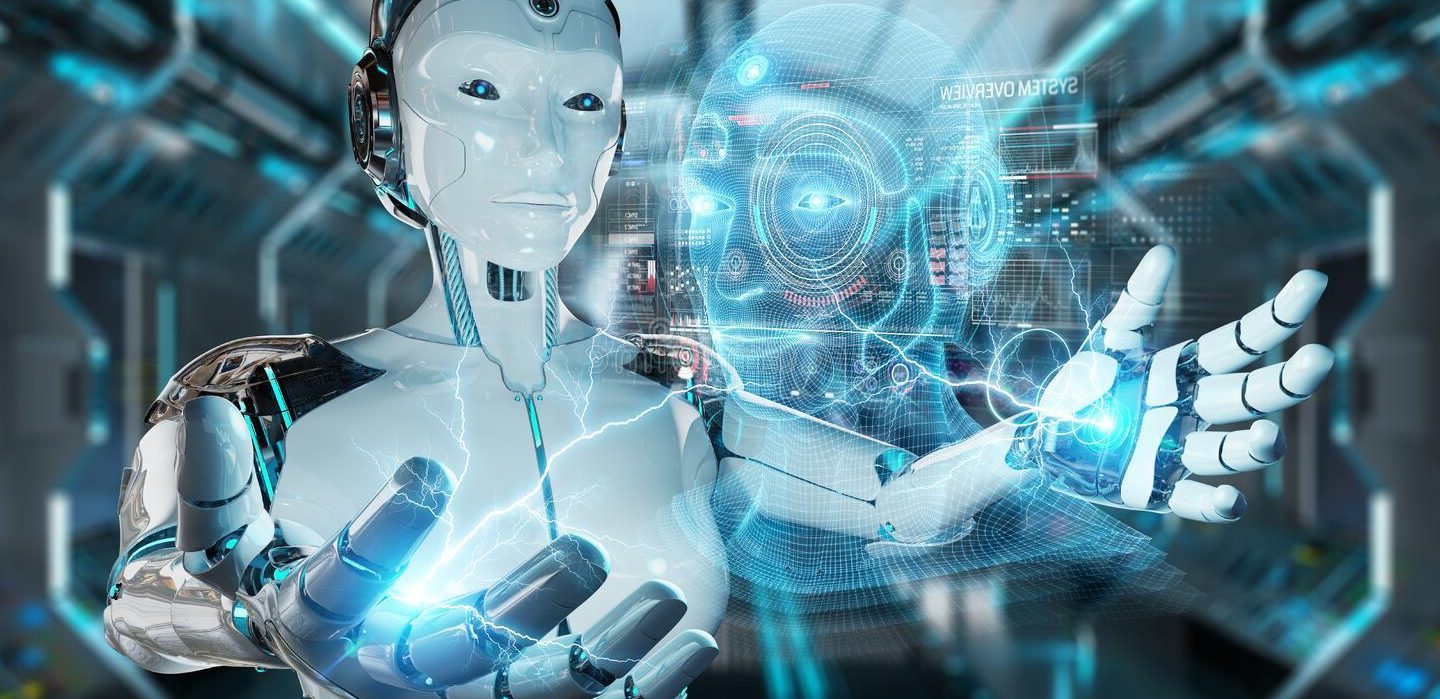



In conclusion, specific AI is designed to excel in a specific domain or function. It is highly specialized and optimized for a particular task, delivering accurate and efficient results. However, it lacks the ability to generalize knowledge or apply its skills to different domains. Despite its limitations, specific AI has proven to be incredibly valuable in industries where repetitive or labor-intensive tasks need to be performed with precision.
General artificial intelligence aims to replicate human-like intelligence across a wide range of tasks.
General artificial intelligence (AI) is an area of research that focuses on creating intelligent machines capable of performing tasks that would typically require human intelligence. The goal of general AI is to develop systems that can understand, learn, and apply knowledge across a wide range of domains and tasks.
Unlike specific AI, which is designed for a specific task or set of tasks, general AI aims to replicate the versatility and adaptability of human intelligence. This means that a general AI system should be able to perform tasks in various domains, such as language understanding, problem-solving, decision-making, and even creative endeavors.
General AI systems are designed to be flexible and capable of learning from experience. They can acquire new knowledge and skills, adapt to new situations, and improve their performance over time. This is achieved through advanced machine learning algorithms and techniques, such as deep learning and reinforcement learning.
General AI has the potential to revolutionize various industries and fields. It can be applied to healthcare, where AI systems can assist doctors in diagnosing diseases and developing personalized treatment plans. In the transportation sector, general AI can be used to develop autonomous vehicles that can navigate complex road conditions and make intelligent decisions. Additionally, general AI can enhance the capabilities of virtual assistants, making them more intuitive and capable of understanding complex queries.
However, the development of general AI poses several challenges. One of the main challenges is the ability to create AI systems that can generalize knowledge and skills across different domains. While specific AI systems excel in their designated tasks, they struggle when faced with new and unfamiliar situations. General AI systems need to be able to transfer knowledge and skills from one domain to another, which requires advanced algorithms and models.
Another challenge is the ethical implications of general AI. As AI systems become more autonomous and capable of making decisions, questions arise about their accountability and potential biases. Ensuring that general AI systems are fair, transparent, and accountable is crucial to avoid unintended consequences and ensure the responsible use of AI technology.
In conclusion, general AI aims to replicate human-like intelligence across a wide range of tasks and domains. It has the potential to revolutionize various industries and fields, but its development comes with challenges, such as knowledge transfer and ethical considerations. As research and development in general AI continue to progress, it is important to prioritize responsible and ethical practices to harness the full potential of this technology.
Specific AI systems are designed for narrow applications, such as speech recognition or image classification.
Specific AI systems, also known as narrow AI, are designed to perform specific tasks or solve specific problems. These systems are trained on a specific dataset and are optimized to excel in a particular domain. They are highly specialized and focused on a narrow range of capabilities.
For example, speech recognition systems are specific AI systems that are trained to accurately transcribe spoken words into written text. These systems are commonly used in voice assistants like Siri or Alexa, as well as in transcription services.
Similarly, image classification systems are specific AI systems that are trained to identify and categorize objects or patterns in images. These systems are used in various applications, such as self-driving cars, facial recognition technology, and medical imaging analysis.
Advantages of Specific AI Systems
- High Accuracy: Specific AI systems are designed and trained to excel in their specific domain, resulting in high accuracy in performing their intended tasks.
- Efficiency: Since specific AI systems are focused on a narrow range of capabilities, they can be optimized for efficiency in terms of processing power and computational resources.
- Rapid Development: Developing specific AI systems is often faster and more straightforward compared to developing general AI systems, as the scope and requirements are well-defined.
Limitations of Specific AI Systems
- Lack of Adaptability: Specific AI systems are not adaptable to new tasks or domains outside their trained capabilities. They require retraining or significant modifications to perform in a different context.
- Dependency on Training Data: Specific AI systems heavily rely on high-quality training data that accurately represents the target domain. Insufficient or biased training data can lead to performance limitations or even errors.
- Limited Understanding: Specific AI systems lack a comprehensive understanding of the context or meaning behind the tasks they perform. They operate based on patterns and correlations in the data they were trained on.
In conclusion, specific AI systems are powerful tools for solving specific problems and performing specialized tasks with high accuracy and efficiency. However, they have limitations in adaptability, dependency on training data, and limited understanding. To address these limitations, researchers and companies are working towards the development of general AI systems that possess broader capabilities and a more comprehensive understanding of the world.
General AI systems have the ability to understand, learn, and perform tasks across different domains.
General AI systems, also known as strong AI or AGI (Artificial General Intelligence), are designed to possess the same level of intelligence and cognitive abilities as humans. These systems have the capacity to understand and learn from different types of information, adapt to new situations, and perform a wide range of tasks across various domains.
Unlike specific AI systems, which are developed to excel in a particular task or domain, general AI aims to replicate human-level intelligence in its entirety. This means that a general AI system should be capable of understanding and reasoning about different types of data, making complex decisions, and even exhibiting creativity and empathy.
One of the main goals of general AI research is to develop machines that can perform any intellectual task that a human being can do. This includes not only tasks that are well-defined and structured, but also those that require interpreting and understanding natural language, recognizing and interpreting images or sounds, and even engaging in social interactions.
Applications of General AI
The potential applications of general AI are vast and diverse. With the ability to understand and learn from different domains, general AI systems could revolutionize various industries and sectors, including healthcare, finance, transportation, education, and entertainment.
In healthcare, for example, general AI systems could assist in diagnosing complex medical conditions, analyzing large amounts of patient data, and even suggesting personalized treatment plans. In finance, general AI could be used to analyze market trends, optimize investment strategies, and detect fraudulent activities.
Furthermore, general AI could greatly enhance the capabilities of autonomous vehicles, enabling them to navigate complex road conditions, make real-time decisions, and communicate with other vehicles and infrastructure. In education, general AI systems could personalize learning experiences, adapt teaching methods to individual students, and provide intelligent tutoring.
The Challenges of General AI
While the potential of general AI is exciting, there are several challenges that need to be addressed before its full realization. One of the main challenges is the development of robust and reliable learning algorithms that can generalize knowledge across different domains without overfitting or underfitting.
Another challenge is ensuring the ethical and responsible use of general AI systems. As these systems become more intelligent and autonomous, there is a need for clear guidelines and regulations to prevent misuse or harm. Additionally, there are concerns about the impact of general AI on employment and societal structures.
In conclusion, general AI systems have the potential to revolutionize various industries and sectors by replicating human-level intelligence and cognitive abilities. However, the development of robust learning algorithms and the establishment of ethical guidelines are crucial for the responsible and beneficial deployment of general AI.
Specific AI is already widely used in various industries, including healthcare, finance, and transportation.
Specific Artificial Intelligence (AI) refers to AI systems that are designed to perform specific tasks or solve specific problems. These AI systems are trained and programmed to excel in a particular domain or area of expertise.
In today’s world, specific AI is already being widely used in various industries. For example, in the healthcare industry, AI is being used to analyze medical images and help diagnose diseases. AI-powered chatbots are also being used in the finance industry to provide customer support and answer queries. In the transportation industry, AI is being used to optimize routes and improve logistics.
One of the key advantages of specific AI is its ability to perform tasks with great accuracy and efficiency. These AI systems are trained on large datasets and can quickly process and analyze vast amounts of information. This enables them to deliver precise results and make informed decisions.
However, specific AI has its limitations. These AI systems are designed for specific tasks and lack the ability to generalize or adapt to new situations. They are highly specialized and cannot perform tasks outside their designated domain. This means that if a specific AI system is trained to diagnose diseases, it cannot be used to analyze financial data or optimize transportation routes.
On the other hand, General Artificial Intelligence (AGI) aims to develop AI systems that possess human-like intelligence and can perform a wide range of tasks across different domains. AGI would have the ability to learn, reason, and adapt to new situations, just like a human being.
While AGI is still a work in progress and has not been fully realized, it holds great potential for revolutionizing various industries and transforming the way we live and work. AGI could be used to develop advanced robotics, autonomous vehicles, and intelligent virtual assistants.
In conclusion, specific AI is already widely used in industries such as healthcare, finance, and transportation. These AI systems are highly specialized and excel in their designated domains. However, they lack the ability to generalize or adapt to new situations. On the other hand, AGI aims to develop AI systems with human-like intelligence and the ability to perform a wide range of tasks across different domains. While AGI is still a work in progress, it holds great potential for transforming various industries and shaping the future of artificial intelligence.
Frequently Asked Questions
1. What is specific artificial intelligence?
Specific artificial intelligence refers to AI systems that are designed to perform a specific task or set of tasks.
2. What is general artificial intelligence?
General artificial intelligence refers to AI systems that have the ability to understand, learn, and apply knowledge across a wide range of tasks and domains.
3. What are some examples of specific artificial intelligence?
Examples of specific artificial intelligence include voice assistants like Siri and Alexa, self-driving cars, and recommendation systems.
4. Is general artificial intelligence currently possible?
No, general artificial intelligence is not currently possible. While there have been advancements in AI, achieving true general intelligence remains a challenge.